Kitchenaid Artisan 1.25l Kettle Review
Latest Update: November 27, 2026
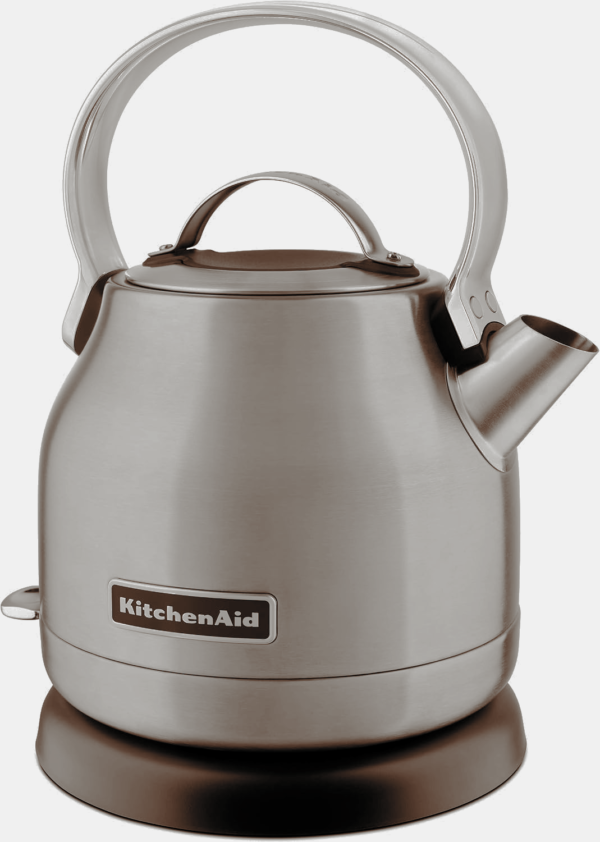
In this Kitchenaid Artisan 1.25l Kettle Review, we focus on the KEK1222PT and the details that matter when choosing a compact electric kettle. Its capacity, handling, controls, cleaning needs and long term performance should be judged separately, rather than inferred from the appearance of similar KitchenAid models.
Practical verdict: the 1.25 L capacity is a sensible fit for one or two people who usually boil smaller batches, and less convenient when several people need water at once.
There is no timed boil result, noise observation or hands-on handling assessment to substantiate claims about speed, quietness or comfort.
Confirm the KEK1222PT’s lid, filter, indicator and controls from exact-model documentation, then weigh the asking price against the capacity and confirmed features you will use.
Key Takeaways
- The KEK1222PT is a compact 1.25 L model, so use its full model name and capacity when comparing specifications.
- A 1.25 L capacity can provide several servings.
- A product description, a controlled hands on test and a customer impression offer different kinds of evidence.
- Assess filling, lid movement, pouring and balance as practical parts of everyday use.
- Do not infer the lid, filter or other water contact materials from the exterior finish alone.
- Weigh capacity, controls, ease of cleaning and demonstrated durability alongside appearance when judging value.
Identify the exact 1.25 L model first
KitchenAid sells kettles with different capacities and controls, so the model code matters as much as the styling. Treat KEK1222PT as the compact 1.25 L model, and keep its details separate from 1.7 L models and kettles with temperature adjustment.
The KEK1222PT is described as a compact KitchenAid kettle for small kitchens and quick boiling. The page titled KitchenAid Pistachio Kettle, Elevate Your Tea Experience gives readers a model specific reference for that compact version.
With its oval body and arched handle, the KitchenAid Pro Line Electric Kettle is a 1.5 liter model with preset temperature options for home use.


A description that says a kettle heats quickly is not the same as a timed test. Customer impressions can help identify experiences people report, but they do not establish a standard boil time, noise level or record of reliability over years of use.
Use the model name and capacity together when assessing a review. Similar shapes and colors do not prove two kettles share the same filter, lid, power base, LED indicator or control functions.
Decide whether 1.25 litres fits your routine
A 1.25 L capacity can provide several servings. The amount available for pouring can be lower if the kettle has a minimum fill level or some water remains inside after use.
| Your usual routine | How 1.25 L may fit |
|---|---|
| One person making a drink at a time | A compact capacity can suit frequent small batches. |
| Two people making drinks separately | The size can work well when each person boils only what they need. |
| Several people making drinks together | A larger kettle can be more convenient when everyone needs hot water at once. |
Judge the amount you normally boil at one time, not just the number of people in the household. Frequent small boils and occasional large batches create different needs, even in homes with the same number of people.
A compact capacity also means less water to pour when you only want one drink. If your routine often includes a full round of drinks, compare the time and effort of boiling more than once with the convenience of a larger kettle.

Assess the finish, filling and pour
Color and shape affect how a kettle looks on the counter, but appearance alone does not establish how well its finish will hold up. For day to day handling, pay attention to how you reach the filling opening, how securely the lid opens and closes, how cleanly the spout pours and how balanced the handle feels when the kettle is full.
In pistachio, the KitchenAid Kettle Pistachio is described as a 1.25 L kettle. Its color and compact size are relevant to counter appearance and capacity, but a claim that it heats quickly needs a timed test.

When you inspect the kettle in person, lift and lower the lid and try pouring with an amount of water similar to your usual fill. Those simple checks reveal more about access and balance than a product photo can.
Judge boiling speed, noise and controls fairly
A useful boil time comparison starts each test with the same volume of water at the same starting temperature. Record the elapsed time with a timer, since a general description such as quick boiling does not give a comparable result.
Noise can change during a heating cycle. Listen separately to the sound while the water heats and the sound at shutoff, rather than describing the whole kettle as simply quiet or loud.
Basic boil shutoff, temperature presets and variable temperature control are different functions. Evidence for one does not establish that a model has the others, so the KEK1222PT should be assessed using details tied to its exact model.
KitchenAid electric kettles include glossy color options such as Pistachio Green and Empire Red, as well as temperature presets. They illustrate how control options can differ between KitchenAid kettle families, even when the designs share a similar look.

For the KEK1222PT, verify automatic shutoff, temperature control, a removable lid, a mesh filter and an LED indicator against documentation for that exact model.
Check the stated minimum fill, lid opening and water-level indication as well. A power base and temperature presets matter only if they match how you use the kettle.
Health Canada’s chemical-testing figures do not establish the KEK1222PT’s boil performance or its specific materials; use documentation for the exact model to verify those details.
Consider construction, water contact and reliability
A stainless steel exterior alone does not establish that the lid underside, filter or other parts that touch water are also stainless steel. Assess each part separately, including the inner wall, spout interior, filter and any exposed connections.
The KitchenAid Stainless Steel Tea Kettle is a stovetop model described with a 1.3 liter capacity, a polished stainless steel thumb press spout, a whistle and vibrant color options. It provides a separate example of a stainless steel tea kettle, with a different heat source and capacity from the compact electric model.
Pale or chalky residue is often mineral scale, while corrosion or finish damage should be judged by where it appears and how it looks.
Check whether residue sits on a water contact surface or whether the visible finish itself has changed, rather than treating every mark as limescale.
A short period of good appearance does not establish long term reliability. Repeated use and documented experience provide a stronger basis for judging durability than a polished exterior alone.
Keep the kettle clean and weigh its value
Remove mineral scale periodically with a descaling method suitable for kettles, then rinse thoroughly. Hard water usually leaves scale sooner, so the cleaning interval should reflect how quickly deposits appear in your home.
Avoid abrasive pads on visible finishes because they can scratch the surface even when the kettle continues to work. Wipe the exterior with a soft cloth and keep cleaning products away from electrical contacts and the power base.
The KitchenAid Elegant Glass Electric Kettle offers a different design approach, with glass and stainless steel, a gooseneck spout for precise flow control and visible water levels. Those features suit readers who value seeing the water level or directing a narrow stream.
We judge value by the combination of capacity, ease of use, useful controls, cleaning effort and demonstrated durability. Styling and a premium position matter to some buyers, but they do not replace practical features that fit your routine.
- Choose compact capacity when your usual batches are small.
- Give more weight to filling and pouring comfort if you use the kettle throughout the day.
- Consider temperature settings only when you regularly need water at different temperatures.
- Include cleaning and finish care in your view of everyday effort.
Frequently Asked Questions
How often should I descale a kettle in a hard water area?
Inspect the inside about once a month and descale sooner when a visible layer forms. If deposits build quickly, shorten the interval and follow the directions for the descaling method you use.
Can I use an electric kettle to heat milk or soup?
No, a standard electric kettle is designed to heat water, and milk or soup can scorch onto surfaces or leave residue in the spout. Heat those foods in a pan or an appliance designed for them.
Can I leave water in the kettle between uses?
Leaving water until your next use is convenient, but fresh water can give tea and coffee a cleaner taste. Empty the kettle if you will leave it unused for an extended period, then let the interior dry.
What should I do if the kettle switches off before the water boils?
Unplug the base and let the kettle cool before checking that the water covers the required heating area. Look for scale around the interior and spout, then clean it before trying again.
Can I use the kettle to prepare instant noodles?
Use the kettle to heat water, then pour that water into a separate bowl or cooking vessel. Keep noodles and seasoning out of the kettle to avoid residue around the heating area and spout.
Does a 1.25 L kettle work for pour over coffee?
Its capacity can provide hot water for a pour over session, but the spout shape determines how precisely the water flows. A gooseneck spout is useful when a narrow, steady stream is central to your brewing routine.
Is the KitchenAid Artisan good?
Yes, for a buyer who prioritizes its 1.25 L size and design over unverified speed or handling claims. Whether it is worth the asking price depends on the exact-model features you confirm and how often you will use them.
See also: B04iZUpex.
Conclusion
Choosing the Kitchenaid Artisan 1.25l Kettle comes down to whether the KEK1222PT capacity and day to day handling fit your routine.
We recommend comparing the exact model, judging performance through consistent tests and considering water contact parts, cleaning and reliability separately from color and finish.
For one or two people who usually boil smaller batches, 1.25 L can be a convenient size. If several people need water at once, a larger capacity may better suit the household.