Kettle care resource hub
How to Descale and Clean an Electric Tea Kettle
Remove limescale, clean the kettle interior and exterior, and rinse away every trace of cleaner with a method suited to your kettle’s material and design. Stainless Steel Tea Kettles brings together practical care guides for electric and stovetop kettles, including stainless steel and glass.
Mineral deposits build up when water is heated and left to evaporate. A light, chalky layer or rough white flakes are common signs of limescale. Dish soap can clean everyday residue, but it does not dissolve mineral scale. Match the cleaning method to the kettle, and read its manufacturer instructions before using vinegar, citric acid, tablets, or another descaler.

Start by identifying the buildup
White or pale deposits with a dry, crusty feel are usually limescale. Brown marks can be tea residue or mineral staining, rather than scale alone. A smooth stain may respond to gentle cleaning, while pitting, flaking, or a damaged surface is not something to scrub away as though it were ordinary limescale. Avoid aggressive cleaning when the mark appears to be damage.
Minerals in hard water are left behind as water heats and evaporates. Deposits may collect on the bottom, around an exposed heating element, behind a spout screen, or on a removable mesh filter. Hidden coils can also develop scale, even when the heating surface is not visible.
Before cleaning an electric kettle: switch it off, unplug it, and let it cool. Keep the base, plug, and electrical connections dry. Never immerse the kettle or its base in water, and do not pour cleaning solution over the exterior.
How to descale an electric kettle with white vinegar
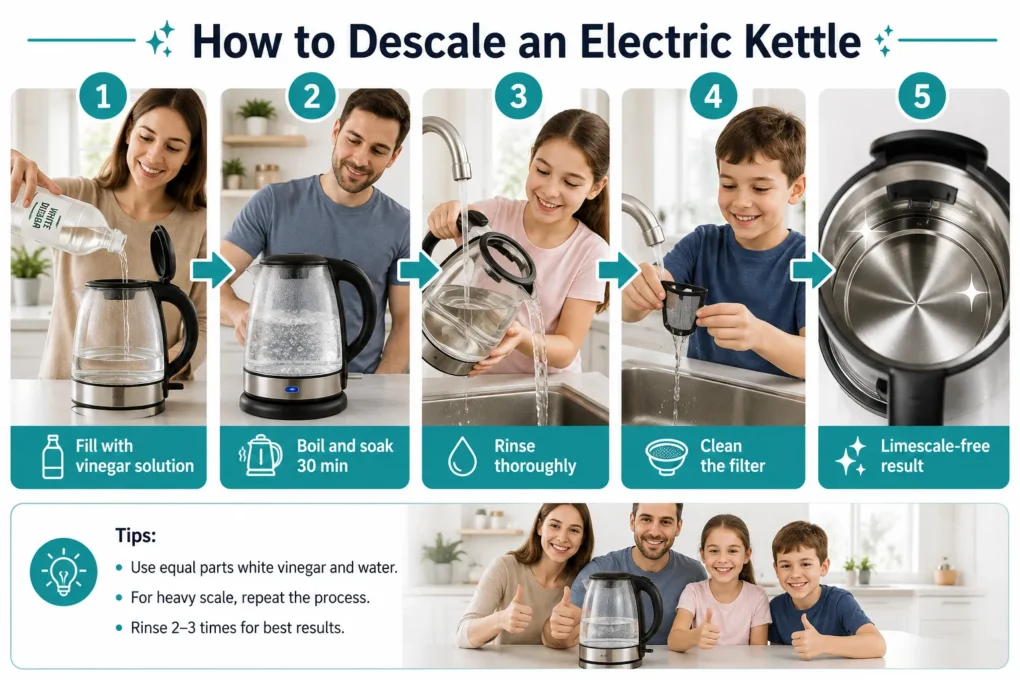
White vinegar can loosen mineral deposits in a kettle when its care instructions allow vinegar. the stainless steel cleaning guide recommends an equal parts solution of white vinegar and water, boiled and left to sit for 20 minutes. Vinegar compatibility varies with kettle materials and construction, so use this method only when the manufacturer permits it.
- Prepare the kettle as directed in its care instructions, and make sure it is cool and unplugged before filling.
- Add equal parts white vinegar and water, keeping the liquid within the kettle’s marked fill limits.
- Heat the solution only if the manufacturer’s instructions allow it. Leave it to sit for 20 minutes, then pour it out.
- For stubborn buildup, repeat the process if allowed. Use a soft bristled brush on accessible areas, with light pressure.
- Rinse the interior thoroughly. Fill with fresh water, boil, and discard it. Repeat until vinegar smell and taste are gone.
Do not use a metal scraper, abrasive pad, or forceful scrubbing on the heating element, sensors, glass, or a coated interior. If heavy scale remains after repeating an approved method, use a descaling product that is compatible with the kettle and follow its package directions.
Other cleaning options for mineral deposits
Citric acid or descaling solution
Descaling solutions come as liquids, tablets, and powders. Choose a product suitable for the kettle material, follow its stated directions, and rinse the kettle thoroughly afterward. Stainless Steel Tea Kettles also provides Aigostar kettle descaling instructions covering vinegar, lime remover, and descaling solution.
Cleaning tablets
Effervescent kettle tablets dissolve in water and help break down limescale and residue. Use them as directed on the package, then rinse the kettle multiple times before making a drink. See the guide to glass kettle cleaning tablets for the tablet cleaning process.
Lemon juice
Lemon juice is an acidic household option that may help loosen mineral deposits. Use it only when the kettle maker permits acidic cleaners, and rinse well to remove its scent and taste. Do not combine cleaning agents.
Baking soda for stains
A gentle baking soda and water paste can help with stains on stainless steel, as described in our stainless steel care guide. Apply it with a soft cloth and light pressure, then rinse fully. Do not treat baking soda as a replacement for an approved descaling method when the problem is thick mineral scale.
Clean filters, spouts, and different kettle surfaces
Remove a mesh filter or spout screen only if the manufacturer designed it to come out. Soak and rinse a removable part according to the care instructions, then gently brush away deposits with a soft brush. Do not push tools into a spout or force a fixed screen out of place.
For routine stainless steel care, use warm water, gentle dish soap, and a soft microfiber cloth. Rinse and dry promptly. The stainless steel cleaning guide advises against putting kettles in a dishwasher, so follow your specific kettle instructions. The site’s stovetop stainless steel kettle guide discusses cleaning and care for stovetop designs.
Wipe a glass kettle gently with a soft cloth and avoid sudden temperature changes that can stress hot glass. For painted, coated, plastic, or mixed material exteriors, use a damp cloth and a mild cleaner approved for that finish. Keep water away from electric bases and connections. Dry the outside after wiping, and do not scrub a finish, sensor, or visible heating element with an abrasive tool.
Rinse well and limit repeat buildup
After descaling, empty the kettle and rinse all accessible surfaces. Boil and discard fresh water more than once if cleaner odor or taste remains. Clean the removable filter separately when needed, and make sure all parts are back in place before using the kettle.
Emptying leftover water after use and rinsing the kettle can reduce residue between deeper cleans. Check for visible scale regularly, especially if your water leaves deposits quickly. Descale when buildup appears or water taste changes, using a frequency suited to your water and kettle.
Want care guidance for a particular design? Compare how exposed heating elements and hidden coils affect access and maintenance, then use the care directions for your own kettle.
Curated kettle cleaning resources
Use these resources to choose a suitable method, care for a particular material, or understand why deposits return.
Useful cleaning tools
Keep a soft microfiber cloth, a soft bristled brush, and gentle dish soap for regular wiping. White vinegar, kettle tablets, and descaling solution can address mineral scale when the kettle instructions allow them. Baking soda paste is an option for stainless steel stains, not a substitute for descaling.
Stainless steel care guide
How to clean a stainless steel tea kettle covers hand cleaning, vinegar descaling, stubborn deposits, stain care, and polishing the exterior.
Glass kettle care guides
Glass kettle cleaning with vinegar explains its limescale method and maintenance routine. Pair it with the tablet guide above to compare two approaches for glass designs.
Water hardness resource
The USGS water hardness explainer describes water hardness and mineral content. It can help you understand why kettles in some homes need more frequent descaling.
Why use Stainless Steel Tea Kettles for kettle care?
Stainless Steel Tea Kettles publishes practical guides, comparisons, and reviews for electric and stovetop kettles. Its cleaning resources address stainless steel and glass, vinegar methods, cleaning tablets, and brand specific descaling guidance. That material focused coverage helps you choose a method around the kettle you own, rather than treating every design as identical.
The site also connects care questions to design differences, including wide openings, removable filters, exposed elements, and hidden coils. Explore the Secura electric kettle review or the Breville glass kettle review for examples of distinct kettle constructions.
Frequently asked questions
How do I remove heavy limescale from my kettle?
Repeat a manufacturer approved descaling method, such as diluted white vinegar if the kettle instructions permit it. Let the solution sit as directed, then use a soft brush on accessible deposits and rinse thoroughly. Avoid metal tools and abrasive pads.
What is the brown buildup inside my tea kettle?
Brown buildup may be tea residue or mineral staining, and a brown mark is not automatically limescale. Chalky, rough deposits are more typical of scale. Clean gently first, and do not scrub areas that are pitted or flaking as if they were ordinary residue.
Is it safe to use a kettle that has limescale?
Limescale is mineral buildup from water, and it can affect kettle performance. Descale the kettle using a method approved for its materials, then rinse it thoroughly before use.
Can I boil vinegar in my electric kettle to clean it?
Use boiled vinegar solution only when the kettle manufacturer allows vinegar and heating a cleaning solution. The stainless steel guide describes equal parts white vinegar and water, followed by a 20 minute rest. Rinse and discard fresh boiled water until the smell is gone.
How often should an electric kettle be descaled?
Descale when you see mineral deposits or notice a change in water taste, and adjust the routine to your water and usage. Stainless Steel Tea Kettles advises checking glass kettles regularly and gives a three to six month cleaning interval for the Secura model. The care instructions for your kettle should guide its schedule.
How should I clean the kettle exterior and removable filter?
Wipe a cool exterior with a soft damp cloth and mild dish soap suited to its finish, then dry it. Clean a removable mesh filter separately only as its instructions allow, using a soft brush for deposits. Keep the electric base and connections dry.
What if cleaning leaves an odor or taste?
Empty the kettle, rinse it well, then boil and discard fresh water. Repeat until no cleaning smell or taste remains. Check the care instructions for any additional rinsing direction for the product you used.
Choose a kettle that suits your care routine
Compare electric and stovetop designs, materials, and cleaning access to find a kettle that fits your everyday use.