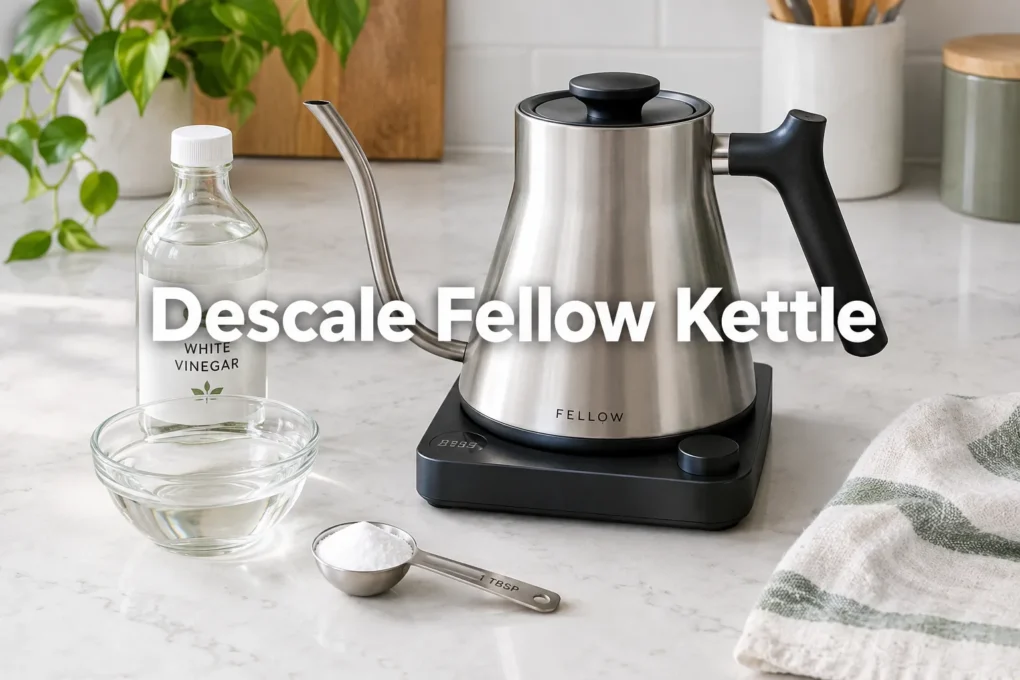
Descale Fellow Kettle
Last updated: October 16, 2026
Quick Answer
To Descale Fellow Kettle, fill it to the max line with a 1:1 mix of white vinegar and water, or 500 mL of water plus two spoonfuls of citric acid, bring it to a boil, and let the solution sit for at least 30 minutes before emptying and rinsing according to Fellow’s own support guidance. Most households should descale every one to two months, and more often with hard water, then boil a full kettle of clean water and discard it before brewing again.
Key Takeaways
- Fellow recommends a 1:1 white vinegar and water solution, or 500 mL water with two spoonfuls of citric acid, for descaling any Fellow electric kettle, including the Stagg EKG Electric Kettle.
- Let the descaling solution sit inside the kettle for at least 30 minutes before you empty, rinse, and boil clean water as detailed in Fellow’s blog.
- Descaling frequency depends on water hardness. Hard water regions may need monthly descaling, while soft water areas can wait longer per Fellow’s guidance.
- A white film, cloudy water, floating flakes, or a kettle that takes longer to reach a boil are classic symptoms telling you it is time to descale.
- Cleaning wipes down the exterior and rinses the spout. Descaling removes mineral buildup and limescale that cleaning alone cannot touch.
- Never submerge the kettle base or the cord in water, and skip steel wool or abrasive scrubbing pads, which can scratch the interior and invite rust.
- Fellow sells dedicated descaling kits, cleaning kits, and a Fellow Drops subscription so you always have fresh solution on hand.
- The Fellow Aiden precision coffee maker and other Fellow coffee gear use a similar descaling approach, just with different soak times.
How to Descale a Fellow Kettle, Step by Step
To descale a Fellow kettle, fill it to the max fill line with equal parts white vinegar and water, or 500 mL water mixed with two spoonfuls of citric acid, bring the mixture to a boil, then let it sit for at least 30 minutes before rinsing thoroughly, according to Fellow’s official care instructions.
This is the same core method Fellow uses across its entire lineup, from the Stagg EKG to the Corvo EKG.
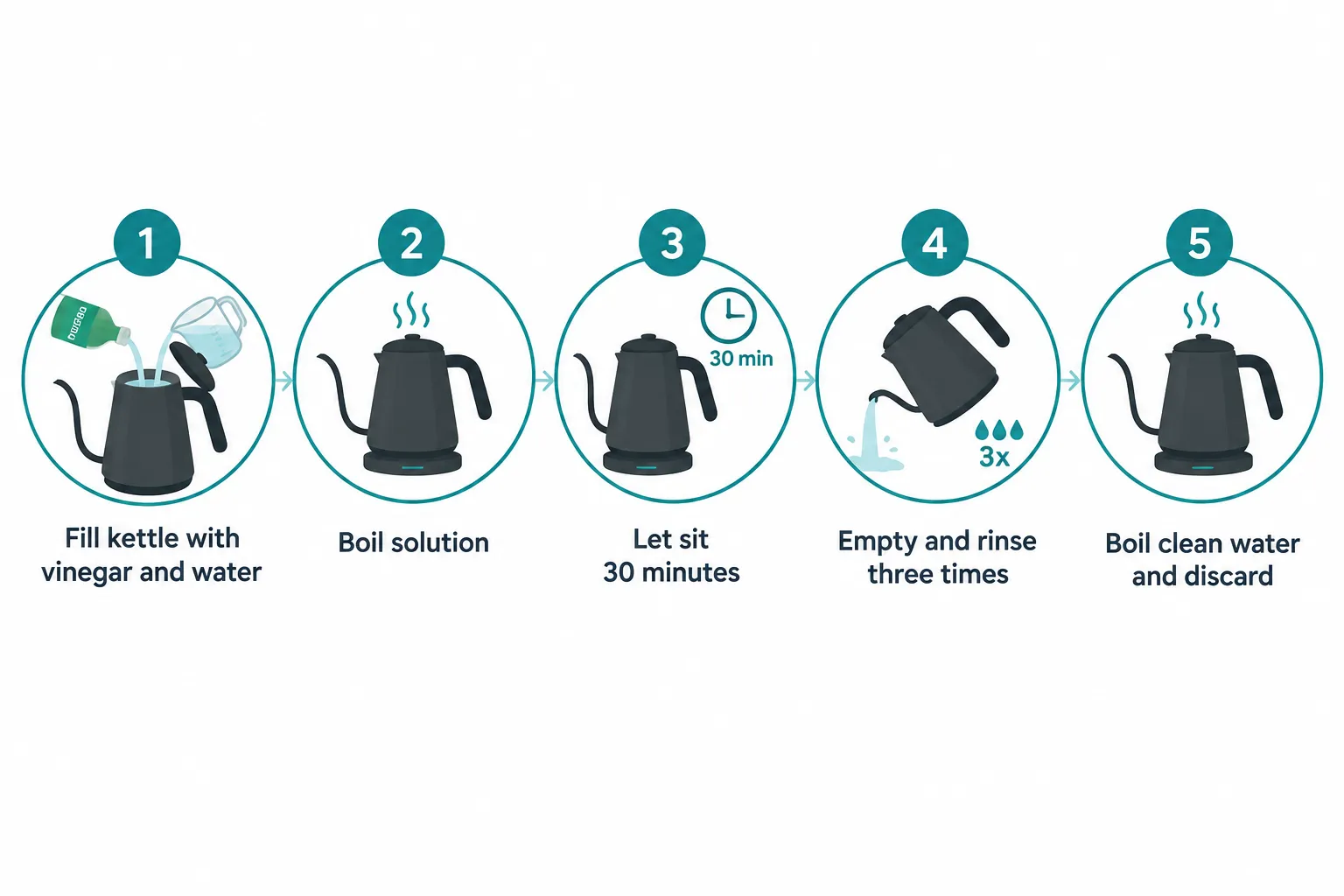
Here is the full process, written as a checklist you can follow while standing at the counter:
- Unplug the kettle base and make sure the kettle is completely cool before you begin.
- Fill the kettle to the max line with a 1:1 ratio of white vinegar and water, or 500 mL water plus two spoonfuls of citric acid.
- Set the kettle on its base, plug it in, and bring the solution to a full boil.
- Turn the kettle off and let the solution sit inside for at least 30 minutes so the acid can dissolve mineral deposits.
- Empty the kettle completely into the sink.
- Wipe the interior gently with a soft cloth if any residue remains. Avoid scrubbing with anything abrasive.
- Rinse the kettle with clean water at least two or three times.
- Fill the kettle with plain water, boil it once more, and discard that water before you use the kettle for tea, coffee, or matcha.
Both the official Fellow product guide and newer manuals for the Clyde and Stagg EKG Pro repeat this same ratio, so you can follow the steps above for almost any model in the current Fellow lineup.
This whole descaling kit process, from filling to final rinse, usually takes under an hour including the soak, which is the single most common question buyers ask before they purchase.
If your routine already includes a Fellow Stagg EKG or a Fellow Corvo EKG electric kettle, bookmark this checklist. You will reuse it every single month.
What Is Descaling, and How Is It Different From Cleaning?
Descaling means dissolving the mineral deposits, mainly calcium and magnesium, that build up inside a kettle from tap water.
Cleaning, on the other hand, is the lighter, more frequent task of wiping the outside and rinsing the spout so the kettle looks and feels fresh.
Please note that these two tasks solve different problems:
| Task | What it removes | How often | Tools used |
|---|---|---|---|
| Cleaning | Dust, fingerprints, loose debris, water spots | Weekly or after each use | Damp cloth, mild soap, soft sponge |
| Descaling | Limescale, mineral scale, hard water buildup | Monthly to every two months | White vinegar, citric acid, or commercial descaler |
Cleaning will never remove limescale because scale forms through a chemical reaction between minerals and heat, not surface grime.
Descaling, by contrast, uses a mild acid to break that scale down so it rinses away. Both tasks matter, and skipping one does not make up for doing the other.
Why Descaling Your Fellow Kettle Matters
Descaling matters because mineral scale insulates the heating element, which slows down how fast your kettle reaches a boil and can shorten the kettle’s working life according to Fellow’s own maintenance guidance.
Safety manuals for the Stagg EKG line also place descaling alongside basic electrical checks like inspecting the cord and never immersing the base, treating it as routine maintenance rather than an optional extra per Fellow’s safety documentation.
A kettle that is never descaled will, over time:
- Take noticeably longer to bring water to a boil, wasting electric power.
- Develop a chalky or metallic taste that carries into coffee, tea, and matcha.
- Clog the spout and lid with flakes of limescale, which may end up in your cup.
- Strain the heating element, increasing the risk of early failure.
If you care about precision brewing, this matters even more. Fellow built the Stagg EKG electric kettle around exact temperature control for pour over coffee, and a scaled up heating element struggles to hold that accuracy.
Buyers comparing kettles for hard water homes should also look at our guide to the best kettle for hard water before deciding which model to bring home.
How Often Should You Descale a Fellow Kettle?
Most Fellow owners should descale their electric kettle every one to two months, though hard water regions often need monthly descaling while soft water areas can stretch to every two or three months.
Fellow’s own blog confirms that frequency depends directly on water hardness, and third party sources echo similar ranges.
Here is how the recommendations line up across sources:
- Fellow’s support team and blog suggest descaling more often wherever tap water is hard, without naming a fixed number of weeks source.
- Alibaba’s technical overview of the Stagg EKG suggests descaling every one to two months using a commercial descaler or a vinegar and water mix.
- Everyday People Coffee and Tea and Seattle Coffee Gear’s product guide both recommend monthly descaling, or whenever you spot white deposits inside the Stagg EKG Pro.
Choose the shorter end of that range if you live somewhere with visibly hard water, notice spotting on glassware, or use the kettle multiple times a day for espresso prep, matcha, or pour over coffee.
Choose the longer end if your water is naturally soft and you only use the kettle occasionally.
Signs It Is Time to Descale: Symptoms and the Descale Light
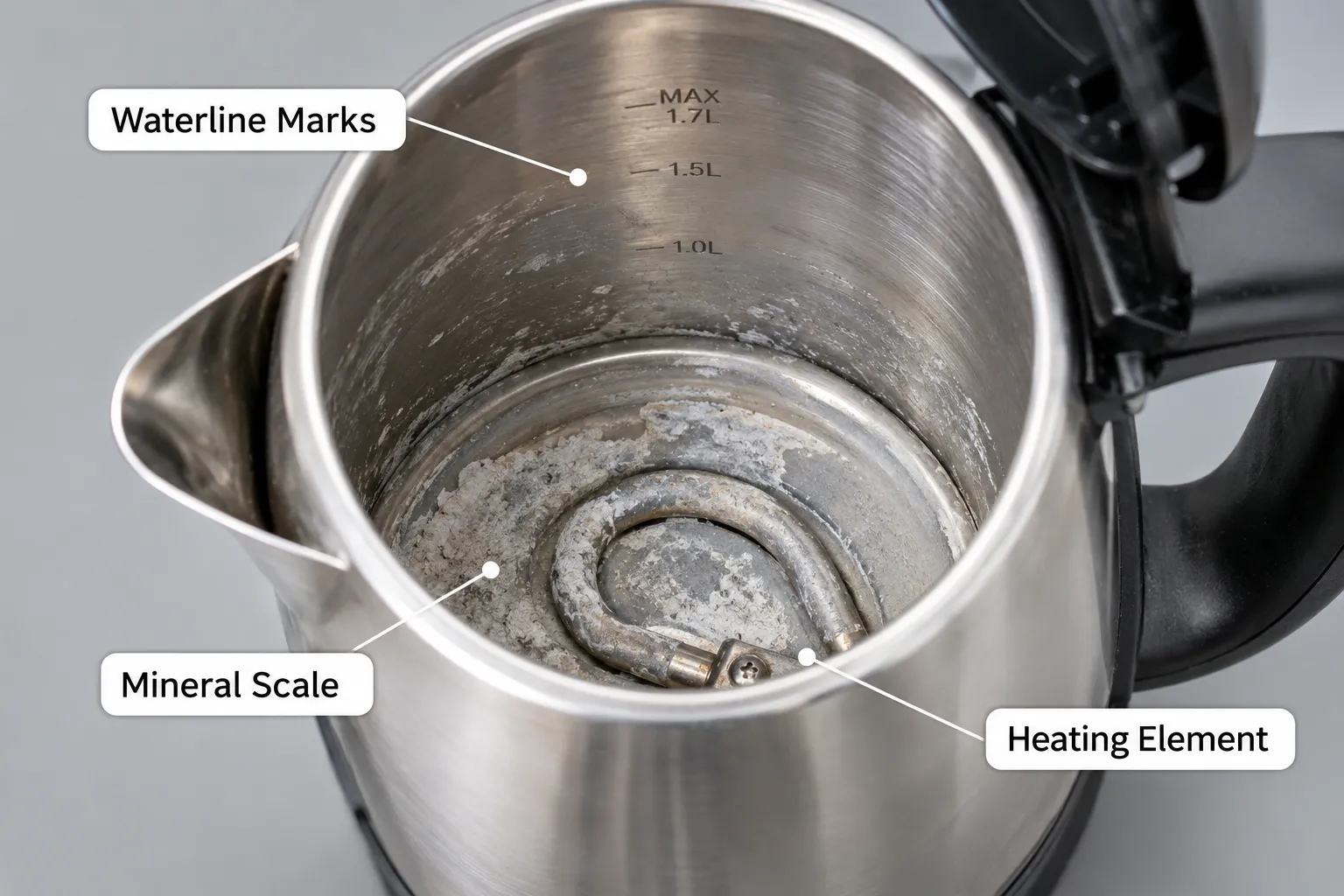
You will know it is time to descale when you see a white or gray film on the kettle’s interior walls, notice flakes floating in the water, or find that boiling takes noticeably longer than it used to.
On models with a built in descale light, that indicator turning on is the clearest symptom of all.
Common symptoms to watch for:
- A chalky white coating along the waterline inside the kettle.
- Small white flakes in your poured water or coffee.
- A metallic or flat taste in tea, coffee, or matcha.
- Longer boil times or a kettle that shuts off before water fully boils.
- Cloudy water even right after a fresh fill.
If the descale light will not turn off even after you have already run a full cycle, repeat the process with a fresh batch of solution, make sure you rinse at least two to three times, and confirm the kettle is fully dry and cool before resetting it on its base.
Only if the light still will not clear after a second attempt, that often points to a buildup deep in the kettle’s sensor area rather than a software glitch, and a longer soak, closer to an hour, with citric acid usually resolves it.
If the descale cycle will not complete at all, or the kettle will not heat during the cycle, contact Fellow support directly rather than forcing another round, since that can signal a hardware issue unrelated to limescale.
What Descaling Solution Should You Use for a Fellow Kettle?
For a Fellow kettle, use either a 1:1 solution of white vinegar and water, or 500 mL water with two spoonfuls of citric acid, both of which Fellow lists as acceptable in its official instructions.
Commercial electric kettle descalers and Fellow’s own descaling solution are also safe alternatives if you prefer a premeasured kit.
A quick comparison of the main options:
| Solution | Ratio or dose | Soak time | Notes |
|---|---|---|---|
| White vinegar and water | 1:1 | At least 30 minutes | Fellow’s standard recommendation |
| Citric acid and water | 2 spoonfuls per 500 mL | At least 30 minutes | Leaves less lingering smell than vinegar |
| Citric acid (alternate dose) | 1 tsp per cup of water | 30 to 60 minutes | Seattle Coffee Gear prefers this over vinegar |
| Commercial descaler or Fellow Drops | Follow kit dose | 15 to 30 minutes | Think Crucial’s recommended range |
| Heated vinegar method | 1:1 at 200°F | 20 to 30 minutes | Everyday People Coffee and Tea’s version |
Yes, white vinegar works fine to descale a Fellow kettle, and it is the formula Fellow itself lists first in its support article.
Lemon juice can also work in a pinch because it contains citric acid, though the concentration is weaker and less consistent than packaged citric acid, so expect to use more juice and possibly a longer soak if you go that route.
Whichever solution you pick, rinse thoroughly afterward, because leftover acid residue is the main reason some people notice an off taste in their next cup.
Choose white vinegar if you already have a bottle at home and do not mind a faint vinegar smell during the soak.
Choose citric acid or a dedicated Fellow descaling kit if you want a cleaner finish with less odor, or if you are descaling a kettle used for delicate drinks like matcha where taste carryover is more noticeable.
Cleaning the Fellow Kettle Inside and Outside
Clean the exterior of a Fellow kettle with a damp cloth and mild soap, and clean the interior only through descaling, since the inside should never need scrubbing once limescale is dissolved properly.
Wash the lid and spout separately if your model allows it, and always let every part dry completely before reassembly.
For the outside:
- Wipe the stainless steel body with a soft, slightly damp cloth.
- Avoid soaking the base or the power cord in water.
- Use a dry cloth for the display and buttons to avoid moisture damage.
For the inside:
- Empty any standing water after each use so it does not sit and encourage scale.
- Skip steel wool, scouring pads, or anything abrasive, since scratching the interior can actually speed up future limescale and introduce rust risk, a warning repeated across Fellow’s own Stagg EKG gear guide and newer Clyde care instructions.
- Rely on the descaling solution to do the scrubbing chemically rather than reaching for a brush.
Related maintenance tasks worth adding to your routine include wiping down the counter area around the base, checking the cord for fraying, and inspecting the lid gasket for mineral buildup that a quick wipe can clear before it hardens.
Descaling the Fellow Aiden and Other Fellow Coffee Gear
Descale the Fellow Aiden precision coffee maker using a similar vinegar and water or citric acid cycle run through its internal reservoir, following the same soak and rinse logic used for electric kettles.
Fellow’s wider lineup, including the Ode Brew Grinder Gen 2 and the Opus conical burr grinder, needs different care since grinders focus on dry coffee grounds rather than water, but kettles and precision coffee makers share the same descaling chemistry.
If you own more than one piece of Fellow gear, it helps to think of maintenance in two buckets:
- Water based devices, like the Stagg EKG electric kettle, Corvo EKG, and the Aiden precision coffee maker, need descaling to clear mineral scale.
- Grinder based devices, like the Opus conical burr grinder and the Ode Brew grinder, need regular brushing and burr cleaning instead of descaling, since no water passes through them.
For a dedicated kettle built around gooseneck pouring and digital temperature control, see our full breakdown of the Fellow Stagg EKG and the step up Stagg EKG Pro, both of which use the same descale and rinse method outlined earlier in this guide.
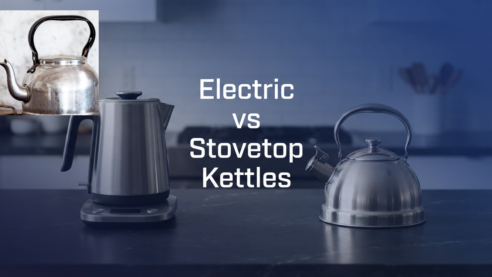
Electric vs Stovetop Kettles: Which Fellow Kettle Should You Choose?
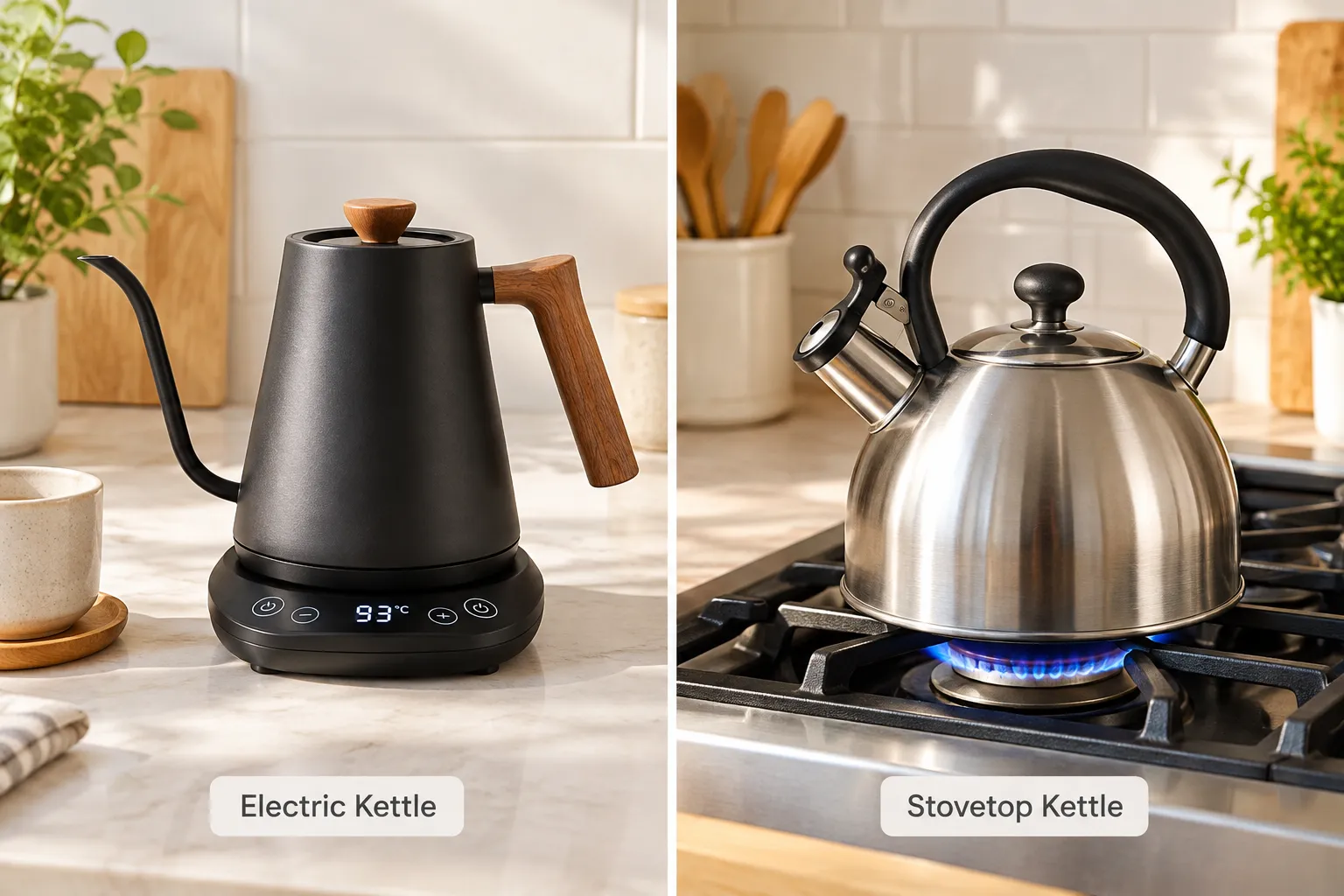
Choose an electric kettle, such as the Stagg EKG or Corvo EKG, if you want digital temperature control, faster boiling, and an automatic shutoff. Choose a stovetop kettle, such as the Fellow Clyde, Stagg, or Raven, if you prefer a simpler design with no cord, no battery, and a classic whistle.
Electric kettles tend to need descaling more often simply because they get used more, boiling water for coffee, tea, and matcha multiple times a day.
Stovetop kettles still scale up over time, just usually on a slower schedule since they are often reserved for occasional use.
If you are weighing both formats before you buy, our comparison of electric gooseneck kettle reviews and the broader best stainless steel tea kettle buying guide walk through the tradeoffs in more detail, including how temperature control affects pour over results.
Shop Fellow Kettles, Grinders, and Descaling Kits
Fellow’s online shop organizes products into Featured picks, Best Sellers, and New Arrivals each season, which makes it easy to spot the current favorites before you check out.
Most core products ship with free US shipping, including islands like Hawaii and Alaska, on qualifying orders.
A quick snapshot of the lineup and typical pricing:
| Product | Category | Price | Notes |
|---|---|---|---|
| Stagg EKG Electric Kettle | Electric kettle | Around 165.00 USD | Gooseneck spout, digital display |
| Corvo EKG Electric Kettle | Electric kettle | Around 115.00 USD | Faster boil, simpler base |
| Aiden Precision Coffee Maker | Precision coffee maker | Around 325.00 USD | Built in brew profiles |
| Opus Conical Burr Grinder | Conical burr grinder | Around 195.00 USD | Espresso to French press range |
| Ode Brew Grinder Gen 2 | Brew grinder | Around 245.00 USD | Consistent grind for drip coffee |
| Carter Everywhere Mug | Carter 3 in 1 lid mug | Around 32.00 USD | Carries hot or cold drinks |
| Descaling and Cleaning Kit | Maintenance kit | Around 20.00 USD | Includes descaling solution and cloth |
| Balanced Mixology Set | Mixology set | Around 65.00 USD | For cocktail and matcha prep |
Bundle savings are common across the shop. A kettle paired with a descaling kit, or a grinder bundled with an Aiden grinder kit, often comes with a percentage off the combined unit price, so check the cart before checkout for current savings.
Joining Fellow Drops also unlocks early access to new colorways and occasional discounts, and signing up to Join Fellow typically includes a welcome offer on your first order.
Shop Now buttons across the site link straight to current stock, so if an item shows as sold out, New Arrivals usually restock within a few weeks.
If you would rather buy directly through a major retailer, the Stagg EKG electric kettle and its descaling accessories are also available through Amazon in the US and the UK.
For a ready stocked option built specifically around descaling routines, the Descale Fellow Gooseneck Kettle listing bundles a kettle with a starter descaling kit, which can save a separate purchase later.
Frequently Asked Questions About Descaling Kettles
What can I use to descale my electric kettle?
Use a 1:1 mix of white vinegar and water, or 500 mL water with two spoonfuls of citric acid, following Fellow’s standard method. Commercial electric kettle descalers also work and usually need a shorter soak, around 15 to 30 minutes.
How to remove limescale in an electric kettle?
Fill the kettle with your chosen descaling solution, boil it, then let it sit for at least 30 minutes so the acid dissolves the mineral scale. Empty, rinse several times, then boil a full kettle of plain water and discard it before normal use.
Is it safe to use a kettle that has limescale?
Light limescale will not make water unsafe to drink, but it does affect taste, slows boiling, and can eventually strain the heating element. Heavy buildup is a sign the kettle needs descaling soon rather than a reason to stop using it immediately.
What happens if I accidentally forget to rinse my kettle after descaling?
Leftover acid residue can leave a sour or metallic taste in your next few cups of coffee or tea. If this happens, run two or three extra rinse cycles with plain water, then boil and discard a full kettle of clean water before drinking from it again.
Can you use white vinegar to descale a Fellow kettle?
Yes. White vinegar mixed 1:1 with water is Fellow’s own recommended descaling solution for electric kettles. Let it sit for at least 30 minutes before rinsing thoroughly.
Can I descale my Fellow kettle with lemon juice?
Lemon juice contains citric acid and can work as a substitute, though it is weaker and less consistent than packaged citric acid. Expect to use more juice and possibly extend the soak time beyond 30 minutes for the same result.
How long does it take to descale a Fellow kettle?
The full process, including filling, boiling, soaking, and rinsing, typically takes under an hour. Most of that time is the required 30 minute soak, with only a few active minutes spent filling and rinsing.
My Fellow kettle’s descale light will not turn off. What should I do?
Repeat the full descaling cycle with a fresh solution and rinse at least two to three times afterward. If the light stays on after a second attempt, try a longer citric acid soak closer to an hour, and contact Fellow support if the issue continues.
Does descaling a Fellow kettle affect the water’s taste?
Descaling itself improves taste over time by removing the mineral scale that causes a flat or metallic flavor. Any temporary vinegar or citric taste right after descaling disappears once you rinse thoroughly and discard one full boil of clean water.
How often should I descale my Fellow kettle?
Most households should descale every one to two months, with hard water areas leaning toward monthly descaling and soft water areas able to wait longer. Watch for a white film, slower boiling, or an active descale light as your cue regardless of the calendar.
Conclusion
Descale Fellow Kettle is a short, repeatable task, not a chore that requires special tools. Fill with a 1:1 vinegar and water solution or a citric acid mix, boil, let it sit for 30 minutes, rinse well, and boil a discard cycle of clean water before your next cup.
Set a reminder every one to two months, sooner if your tap water runs hard, and you will keep boil times fast, flavor clean, and the heating element healthy for years.
If you are still deciding between models, start with our side by side look at the Fellow Stagg EKG and Fellow Corvo EKG electric kettles, both of which follow the exact descaling routine covered here.
Pick the kettle that fits your daily coffee, tea, or matcha habit, build descaling into your monthly routine from day one, and the kettle will reward you with faster boils and cleaner tasting water for the long run.






Pingback: Fellow Kettles: The 2026 Complete Buyer's Guide & Performance Analysis - Stainless Steel Tea Kettles