
316 Stainless Steel Teapot
Latest Update: November 09, 2026
A 316 Stainless Steel Teapot can suit tea lovers who want a corrosion resistant metal vessel, but the grade is only one part of a good choice. We will help you compare its materials, intended use, heating construction, capacity, and care needs.
Key Takeaways
- 316 stainless steel: Molybdenum helps this alloy resist corrosion from salts and other chlorides, but the grade is not corrosion proof.
- Brewing or heating: A teapot steeps tea, while a kettle heats water. An infuser and a stovetop base serve different purposes.
- Induction use: The base needs to be compatible with induction. A stainless steel body alone does not establish that compatibility.
- Materials: Compare the body, lid, infuser, seams, and other surfaces that touch tea or water, not only the grade named for the body.
- Practical design: Choose a useful capacity, secure lid, controlled spout, and comfortable handle for the way you brew and serve.
- Care: Mild soap, warm water, and a soft sponge help remove tea residue without scratching the surface.
What 316 stainless steel means
316 stainless steel is an alloy that typically contains 16 to 18 percent chromium and 10 to 14 percent nickel, according to the Journal of Agricultural and Food Chemistry.
Molybdenum is another distinguishing element, and it improves resistance to corrosion from salts and other chlorides.
That added resistance is useful in settings where chloride exposure is a concern, but 316 remains corrosion resistant, not corrosion proof.
Compared with common 304 stainless steel, 316 contains molybdenum and generally offers better resistance to chloride corrosion, while 304 is a widely used grade for kitchen vessels.


The grade name describes an alloy, not the quality of an entire vessel. A body described as 316 does not automatically mean its lid, infuser, seams, or other tea and water contact surfaces use the same material.
For a closer look at the differences, read our guide to 304 and 316 stainless steel grades. Compare the stated material for each component, since the full construction matters as much as the alloy named for the body.
Know whether you need a brewing teapot or a kettle
A brewing teapot holds tea leaves and hot water together while the tea steeps. A removable tea infuser makes loose leaves easier to separate when brewing is complete, supporting tea and water separation without pouring stray leaves into the cup.


The Stainless Steel Tea Pot with Infuser has a removable basket that holds loose leaf tea while it steeps. It suits a brewing routine where you want to lift out the leaves before serving.
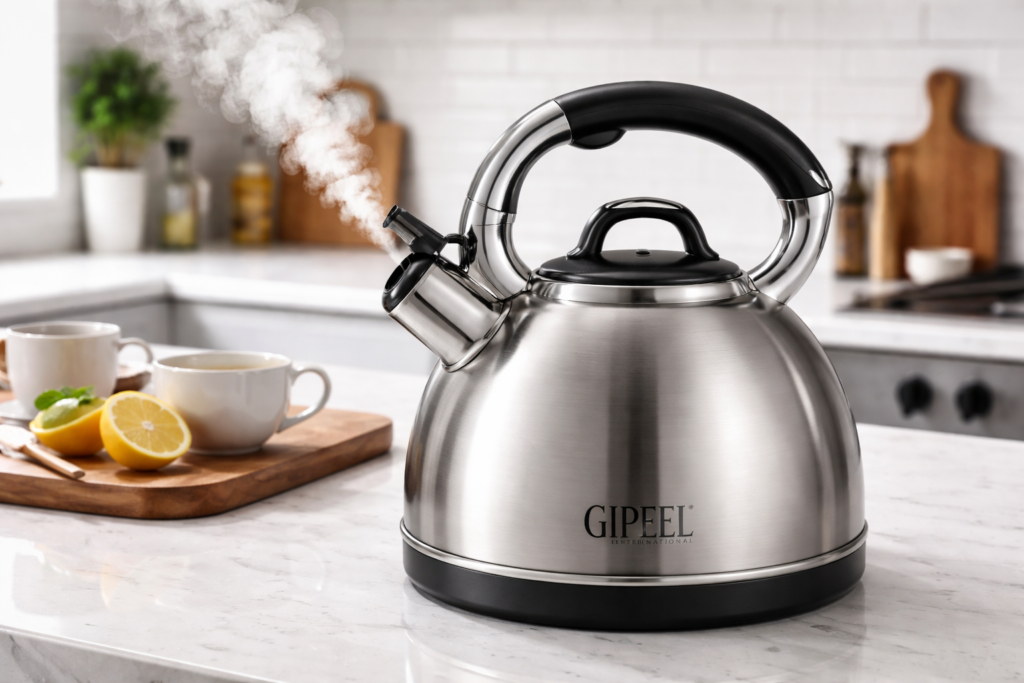
A stovetop kettle has another job: it heats water, which you pour into a cup or separate teapot. A whistling spout signals boiling, but the whistle does not steep tea.

The Whistle Tea Kettle Stainless Steel is described as a durable, high grade stainless steel kettle with an ergonomic handle and an audible whistle when water reaches boiling point. Choose this type of vessel when you want a signal for boiling water, rather than an infuser for steeping.
For a vessel intended to do both jobs, judge the brewing function separately from the heating function. An infuser does not establish that a vessel can be used on a stove, so look for a design intended for the specific heating method.
Our articles on the stainless steel teapot and tea pots with infusers offer more guidance on choosing between brewing styles.
Compare heating construction and stovetop fit
Induction heats a compatible magnetic base, so the stainless steel in a vessel body alone does not establish induction compatibility.
Look for the base design and the stated heating methods, because those details determine whether the vessel matches your cooktop.
A layered base with an aluminum core spreads heat more evenly than stainless steel alone, while the stainless steel surfaces provide the contact layer.
A seamless base can also be part of a vessel’s construction, but its presence does not replace checking compatibility with the intended heat source.


Use a vessel only with the heating method its construction and instructions support. A brewing teapot is suitable for direct heat only when its construction and instructions support that use.
For more stovetop selection guidance, see our stainless steel tea kettles for the stovetop and stainless steel kettle buying guide.
Choose capacity, pouring, lid, and handle features
Choose capacity around the number of cups you usually serve, and leave room for water to move during steeping rather than filling the vessel to its brim. Capacity also affects storage and the weight of a full pot, so consider how much you pour at a time.

A well fitting lid helps limit spills as you pour, and a removable infuser should lift out easily for serving and cleaning. A shaped or drip resistant spout supports controlled pouring, while a secure handle gives you a steady grip and keeps fingers away from hot surfaces.
The Willow and Everett Stovetop Tea Kettle, 2.75 Quart, and OXO Brew Classic Tea Kettle, 1.7 Quart suit different serving preferences.
Willow and Everett is made of food grade 18/8 stainless steel and has an ergonomic handle, even heating, and a spout cover, while the OXO has a brushed stainless steel design, a soft non slip handle, and a spout that opens when the whistle sounds and closes after pouring.
A whistle matters on a water heating kettle when you want an audible boiling signal, but it is not a tea steeping feature. When comparing a lid and handle for stovetop use, look for a lid that seats securely and a grip designed to stay cool during use.
Our guide to the stainless steel tea pot covers more details to weigh when choosing a serving vessel.
Assess food contact surfaces as a whole
Judge the body, lid, infuser, and seams as separate surfaces when comparing material claims. A grade named for the body does not automatically describe every part that touches tea or water.
Food contact suitability depends on the finished component and its intended use, not only on the words 316 stainless steel. Look at the complete design, including joins and mixed materials, because the details of each part contribute to how the vessel is made.
If you are arranging a custom order, make the written specifications clear for the alloy used on each contact surface, capacity, color, logo, and packaging.
Keeping those requests distinct helps prevent a general description of the vessel body from standing in for details about its components.
Clean and maintain stainless steel tea vessels
Rinse tea residue soon after use, then wash the body and infuser with warm water and mild dish soap. This keeps tannin residue from accumulating and becoming harder to remove.
Use a soft cloth or nonabrasive sponge, since steel wool and harsh scouring can scratch polished surfaces. Clean removable filters and lid crevices separately, then dry the pieces to reduce water spots and trapped residue.
Avoid leaving brewed tea in the vessel for long periods, since extended contact can leave stains and make cleaning more difficult. If mineral buildup appears, use a cleaning method suited to the vessel’s materials and follow its care instructions.
Frequently Asked Questions
Is 316 stainless steel suitable for drinking water?
316 is a corrosion resistant stainless steel alloy used in vessels designed for liquid contact. The grade describes the material, while the finished vessel’s intended use depends on its complete construction.
Which teapot material is practical for everyday brewing?
Stainless steel is a practical choice when you want a durable vessel that is easy to wash and does not show tea color through its walls. Glass makes the color of the brew visible, while ceramic offers an opaque alternative with a different feel at the table.
Can a stainless steel teapot change the taste of tea?
A clean stainless steel vessel should not add a distinct flavor to tea. Lingering aromas from stored tea or residue can affect the character of a later brew, so a thorough rinse between different teas helps keep flavors separate.
Can a stainless steel teapot go in the dishwasher?
Dishwasher use depends on the construction and care directions for the particular vessel. Hand washing gives you more control over lids, infusers, and joined components that may have different care needs from the steel body.
Does 316 stainless steel keep tea hot for a long time?
The grade alone does not provide insulation, because stainless steel conducts heat. A double wall design can reduce heat transfer compared with a single wall vessel, so insulation construction matters more than the alloy designation for heat retention.
What are the disadvantages of 316 stainless steel?
316 stainless steel is corrosion resistant, not corrosion proof, and it does not insulate well because steel conducts heat. The grade also describes only the alloy, so it does not guarantee the quality or material of every part of a finished vessel.
What is the healthiest teapot to use?
Choose a teapot based on its material, construction, and care instructions. Stainless steel, glass, and ceramic offer different practical qualities.
Is 316 stainless steel good quality?
Yes, 316 is a durable, corrosion resistant stainless steel alloy, with better resistance to chloride corrosion than common 304 stainless steel. However, the grade alone does not determine the quality of a whole teapot; its other components and construction matter too.
See also: B09Q2acG1.
Conclusion
Choosing a 316 Stainless Steel Teapot starts with understanding what the grade means, then matching the vessel to your brewing or water heating routine.
Compare the body and other food contact surfaces, heating construction, capacity, lid, infuser, and handle before settling on a design.
For a daily ritual centered on loose leaf tea, a removable infuser and easy cleaning may matter most. If you need water heating, focus on the base, cooktop fit, pouring control, and whether a whistling spout suits your routine.





Pingback: Can You Put a Glass Teapot on the Stove? Full Safety Guide