Electric or Stovetop Tea Kettle
Latest Update: October 11, 2026
Choosing an Electric or Stovetop Tea Kettle comes down to how you heat water, where you use your kettle, and which features make your daily routine easier. We will compare heat sources, capacity, safety, pouring, temperature control, and cleaning so you can choose a kettle that fits your kitchen.
Key Takeaways
- Choose electric when you have convenient outlet access and value built in controls, automatic shutoff, or cordless pouring.
- Choose stovetop when you want a kettle that works with a compatible cooktop or a suitable outdoor heat source.
- For small servings, pay attention to the minimum fill line as well as the total kettle capacity.
- For delicate tea, variable temperature settings help you heat water below boiling. A gooseneck spout helps direct water for pour over coffee.
- For easy upkeep, descale mineral buildup and clean the lid, spout, and exterior. Our electric kettle cleaning guide covers a simple care routine.
- For induction cooking, choose a stovetop kettle with a base designed for an induction cooktop.
How electric and stovetop kettles heat water
An electric kettle heats water with a built in heating element and needs access to a suitable outlet. A stovetop kettle has no built in heater, so it relies on a burner or cooktop to transfer heat through its base.
A stovetop kettle can work on a gas or electric cooktop, and it can also work on an induction cooktop if its base is compatible. Induction cooktops heat compatible cookware through its base, so the kettle needs a compatible base.
Can you use a glass tea kettle on an electric stove? Yes, if the glass kettle is designed for stovetop heat and the type of electric stove you use. An electric kettle with a separate power base belongs on its base, not on a burner.
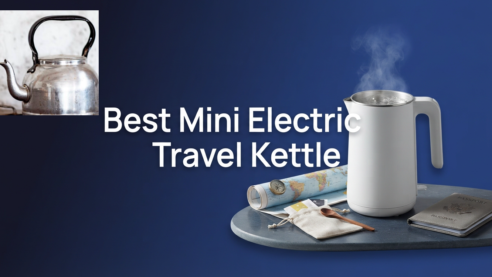
Travel and outdoor use call for the same practical check. Decide whether your destination has a suitable power outlet or a cooktop that matches the kettle, then consider how much counter space you have at home and where you will store it.


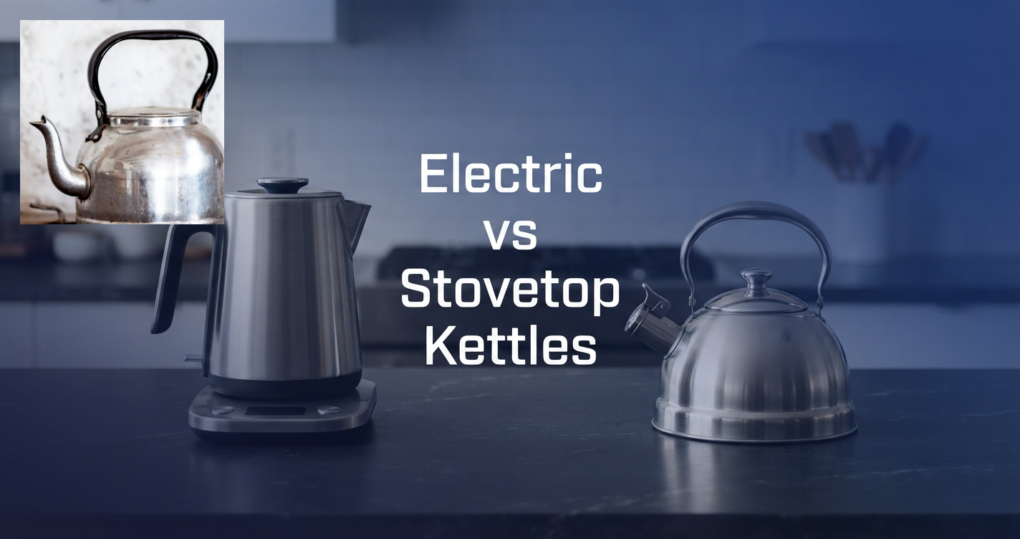
These visual examples show why shape and placement matter alongside heating style.
For a closer look at the practical differences, read our comparison of stovetop and electric kettles. In a United States kitchen, also consider whether a convenient outlet and its circuit can handle the kettle load, especially when other high power appliances are in use.
Compare boiling, energy use and kettle capacity
Heating one cup takes less time and energy than heating a full kettle. Choose a capacity and minimum fill that suit the amount you usually make, because heating more water than you need adds time and uses additional energy.
Energy use depends on the kettle, the amount of water, and the heat source. A covered stovetop kettle and a close match between the kettle base and burner help limit heat escaping around the sides.

Efficiency is about 80 percent for an electric kettle, 70 percent for an electric stovetop, and 85 percent for induction.
Source, Inside Energy
Use the fill markings to judge whether a kettle can handle one cup or several servings. Do not fill below the minimum or above the maximum, since the minimum supports proper use and an overfilled kettle can spill hot water while heating or pouring.
The Stainless Steel Tea Kettle Electric has a 1.7 liter capacity and a 1500 watt heating element, along with automatic shutoff, cordless pouring, a stay cool handle and lid, and removable filters.
Its stated capacity makes it useful when you regularly prepare more than one serving, while its filters help catch particles as you pour.
The Primula Stewart Whistling Stovetop Tea Kettle holds 1.5 quarts and has a food grade stainless steel body, a flip up whistling spout, a cool touch folding handle, and a wide mouth lid for cleaning. It suits a stovetop routine where a clear boil signal and room for easy hand cleaning are useful.


Consider safety, handles and boiling signals
View On AmazonAutomatic shutoff can stop an electric kettle from continuing to heat after the water boils. Boil dry protection can stop heating if the kettle runs low on water, making both features useful for routine use.
A stovetop kettle needs attention while it heats. Its handle and body can become hot, so use a suitable grip when pouring, even if the handle looks insulated.
An electric kettle exterior can also become hot unless its construction provides a cool touch surface. A whistle can alert you when a stovetop kettle boils, while an electric model may switch off automatically. Neither signal replaces careful placement, attentive use, and controlled pouring.
The Secura Double Wall Stainless Steel Electric Kettle has a 100 percent stainless steel interior, double wall stainless steel construction, and an outer surface described as free of BPA and designed to stay cool.
Its 1.5 liter capacity and STRIX control with automatic shutoff and boil dry protection make its construction especially relevant for readers who value built in safety controls.


Match temperature and pouring to tea and coffee
Variable temperature settings help when you want water below boiling for delicate green or white tea. Black tea generally suits hotter water, so choose temperature control if you often make different kinds of tea and want to set the water for each one.
For pour over coffee, a gooseneck kettle gives you a narrow spout for directing a steady stream over the grounds. The spout shape provides pour control on its own, while an electric version can also offer temperature settings.
The Bonavita Gooseneck Electric Kettle is a gooseneck electric kettle with dedicated temperature control settings. It suits readers who want to guide the pour and set water temperature as part of preparing coffee or tea.
The Cuisinart Electric Tea Kettle has six preset temperatures, a 1500 watt heating element, and a 1.7 liter capacity.
Its 30 minute Keep Warm option can help when you are serving several cups over time, though holding water warm does not automatically improve the taste of every drink.
For more detail on choosing settings, see our guide to an electric kettle with adjustable temperature. A kettle heats water rather than brewing tea, so steep tea leaves in a teapot or cup after bringing the water to the desired temperature.

Plan for cleaning, materials and upkeep
Descale mineral deposits regularly, especially if your water is hard. Limescale can collect on heating surfaces and affect performance, so a regular descaling routine matters for both electric and stovetop kettles.
Descaling addresses mineral buildup, while washing the lid, spout, and exterior removes other residue. Follow cleaning directions suited to the kettle material, and keep the electric base and cord away from water.
Stainless steel is a durable choice for regular kitchen use, while glass makes it easy to see the water level and the kettle interior. Consider the materials that touch the water if you notice taste differences, and choose a construction that feels comfortable to lift and pour.
A wide opening gives your hand or cleaning brush better access to the interior. A removable filter can also make it easier to clean around the spout, where scale and fine particles may collect.
The Stainless Steel Tea Kettle is a stovetop kettle described as durable, dishwasher safe, and easy to clean. It is designed for use on a range top or cooktop, making it a straightforward option for a kitchen that already relies on stovetop heating.

Choose the kettle for your kitchen and routine
Choose electric when a convenient outlet is available and you value built in controls, automatic shutoff, or cordless pouring.
Think about counter space and where the base will sit, since an electric model needs a practical place to plug in and lift off for pouring.
Choose stovetop when you prefer a kettle that works with a compatible cooktop or need an option for a place with a suitable heat source.
For camping or travel, decide first whether you will have a usable outlet or cooktop, then weigh portability against electric controls.
Frequent small servings, choose a kettle that can be used safely with the amount of water you normally heat. For shared use, capacity, handle comfort, and a spout that pours neatly into more than one cup matter more.
Consider the sounds and signals that suit your routine too. A whistling kettle gives an audible cue on the stove, while an electric kettle may click or make a signal as it switches off, depending on its design.
If your kitchen is short on storage, a folding handle can help a stovetop kettle fit into a cupboard. If the kettle will stay on the counter, give the electric base a stable space near an outlet and leave enough room to lift the kettle safely.
Frequently Asked Questions
Can an electric kettle cook tea leaves directly in the water?
Most electric kettles are designed to heat water, and loose leaves can collect around a filter or spout. If you use a kettle with a removable tea basket, rinse the basket after steeping so tea residue does not remain inside it.
How long should I wait after boiling water before pouring it for green tea?
There is no fixed waiting time that works for every kettle, because the starting amount of water and room conditions affect how quickly it cools. Use a thermometer or a variable temperature setting to reach the brewing temperature you prefer.
Is it safe to leave an electric kettle plugged in when it is switched off?
A switched off kettle is not actively heating, but its base remains connected to power while it is plugged in. Unplugging it after use disconnects the base, which is a sensible choice when the counter is wet or you will be away for a while.
What is the best electric kettle for everyday tea and coffee?
No single electric kettle suits every kitchen or drink routine. Our guide to the best electric kettle for tea can help you compare options for daily brewing.
Is glass or stainless steel better for a tea kettle?
Choose the material you prefer to handle and see in your kitchen, and check its care instructions before buying.
What is the best camping kettle?
The best camping kettle depends on the heat source available at your campsite and how much space you have to carry it. Choose a stovetop kettle that is compatible with your camping stove or other suitable heat source; choose an electric kettle only if you have a usable outlet.
Conclusion
An Electric or Stovetop Tea Kettle can be the right choice, depending on your heat source, kitchen space, and daily habits.
Choose electric for built in controls and convenient shutoff, or stovetop for cooktop flexibility, then match capacity, pouring style, and cleaning needs to the way you make tea and coffee.