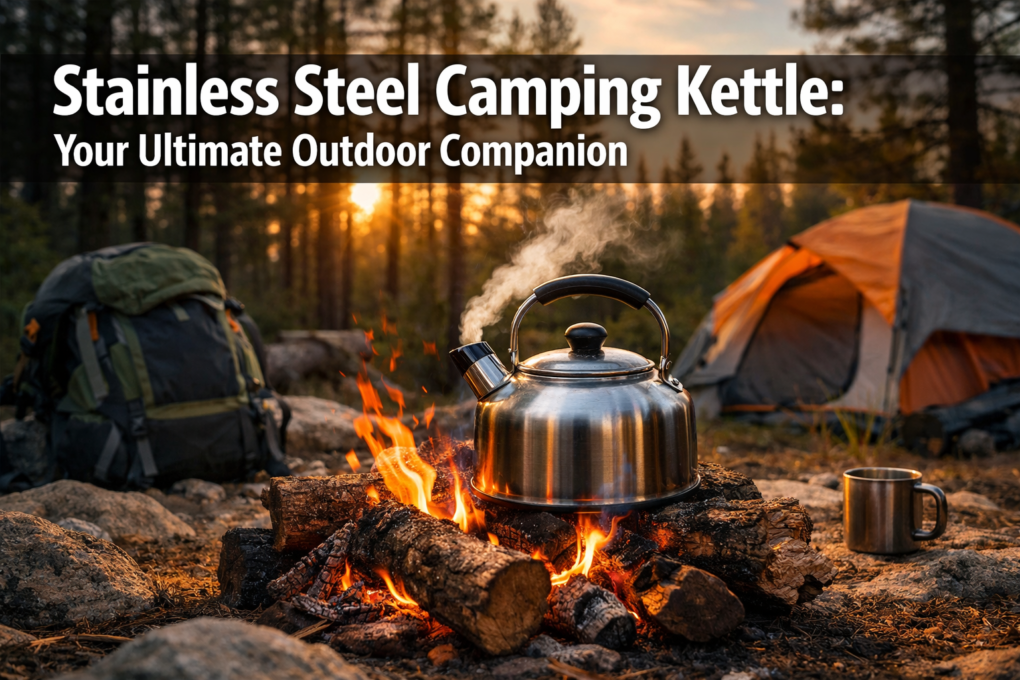
Stainless Steel Camping Kettle
Picture this: dawn breaks over a misty mountain ridge, and the first thing on your mind isn’t the stunning view, it’s that perfect cup of hot coffee or tea to warm your hands and spirit. For outdoor enthusiasts in 2026, the Stainless Steel Camping Kettle has become more than just gear; it’s the centerpiece of countless wilderness memories, the reliable companion that transforms cold mornings into cozy rituals.
Whether you’re a seasoned bushcraft expert or taking your first steps into the camping lifestyle, understanding what makes a quality camping kettle can elevate your entire outdoor experience.
The outdoor adventure community has witnessed remarkable growth, with more people seeking connection with nature and building camping confidence through hands-on experience.
At the heart of this movement sits a simple yet essential piece of equipment: a durable, portable camp tea pot designed to withstand the rigors of campfire use while delivering that comforting hot beverage exactly when you need it most.
Key Takeaways
- Stainless steel camping kettles offer superior durability and corrosion resistance compared to aluminum alternatives, making them ideal for rough outdoor conditions and long-term use
- Material choice significantly impacts weight, heating speed, and cost, with stainless steel providing the best balance for base camping and car camping scenarios
- Proper capacity selection (1.2L-2.2L) depends on group size and camping style, ensuring adequate hot water for beverages and meal preparation
- Open-fire compatibility and heat-resistant handles are critical safety features that distinguish quality camping kettles from standard kitchen models
- Maintenance practices like proper cleaning and storage extend kettle lifespan while preserving water taste and preventing corrosion in outdoor environments
Why Choose a Stainless Steel Camping Kettle for Your Outdoor Adventures
The decision to invest in a Stainless Steel Camping Kettle goes far beyond simple aesthetics.
For women entering the camping community and outdoor enthusiasts building their gear collection, understanding the unique advantages of stainless steel helps build camping confidence and ensures smart purchasing decisions.
Unmatched Durability for Wilderness Conditions
Stainless steel stands as the champion of outdoor cookware durability. Unlike aluminum kettles that dent easily when dropped on rocky terrain or packed tightly in a backpack, stainless steel maintains its structural integrity through years of rough handling.
Field testing by outdoor gear experts consistently demonstrates that stainless steel camping kettles resist scratches, dings, and deformation even after hundreds of camping trips.
This resilience matters tremendously for solo female camping scenarios where equipment reliability becomes a safety consideration. When you’re miles from civilization, knowing your kettle will perform flawlessly provides peace of mind that’s worth its weight—literally.
Corrosion Resistance Across All Environments
One of the most compelling reasons outdoor empowerment programs recommend stainless steel involves its exceptional resistance to rust and corrosion.
Whether you’re camping in humid coastal environments, high-altitude mountain regions, or anywhere in between, a quality stainless steel camping kettle maintains its integrity without developing the oxidation issues that plague other materials.
This corrosion resistance extends to the water quality itself. Stainless steel doesn’t impart metallic tastes to your beverages, ensuring that morning tea tastes exactly as it should—a small luxury that becomes deeply appreciated during multi-day camping adventures.
Safety Features for Open Fire Use
The camping lifestyle often involves cooking over open flames, and this is where stainless steel truly shines.
Unlike certain materials that can release harmful compounds when exposed to direct fire, food-grade stainless steel remains inert and safe.
The material’s high melting point (approximately 2,500°F) means you can confidently place your kettle directly on campfire grates, over wood-burning camp stoves, or on portable gas burners without concern.
Safety considerations include:
- 🔥 Heat-resistant handles (often wrapped in silicone or featuring stay-cool designs)
- 🔥 Stable base construction preventing tip-overs on uneven surfaces
- 🔥 Secure lids that won’t dislodge during boiling
- 🔥 Clear capacity markings to prevent overfilling
The Weight Trade-Off: Understanding Your Camping Style
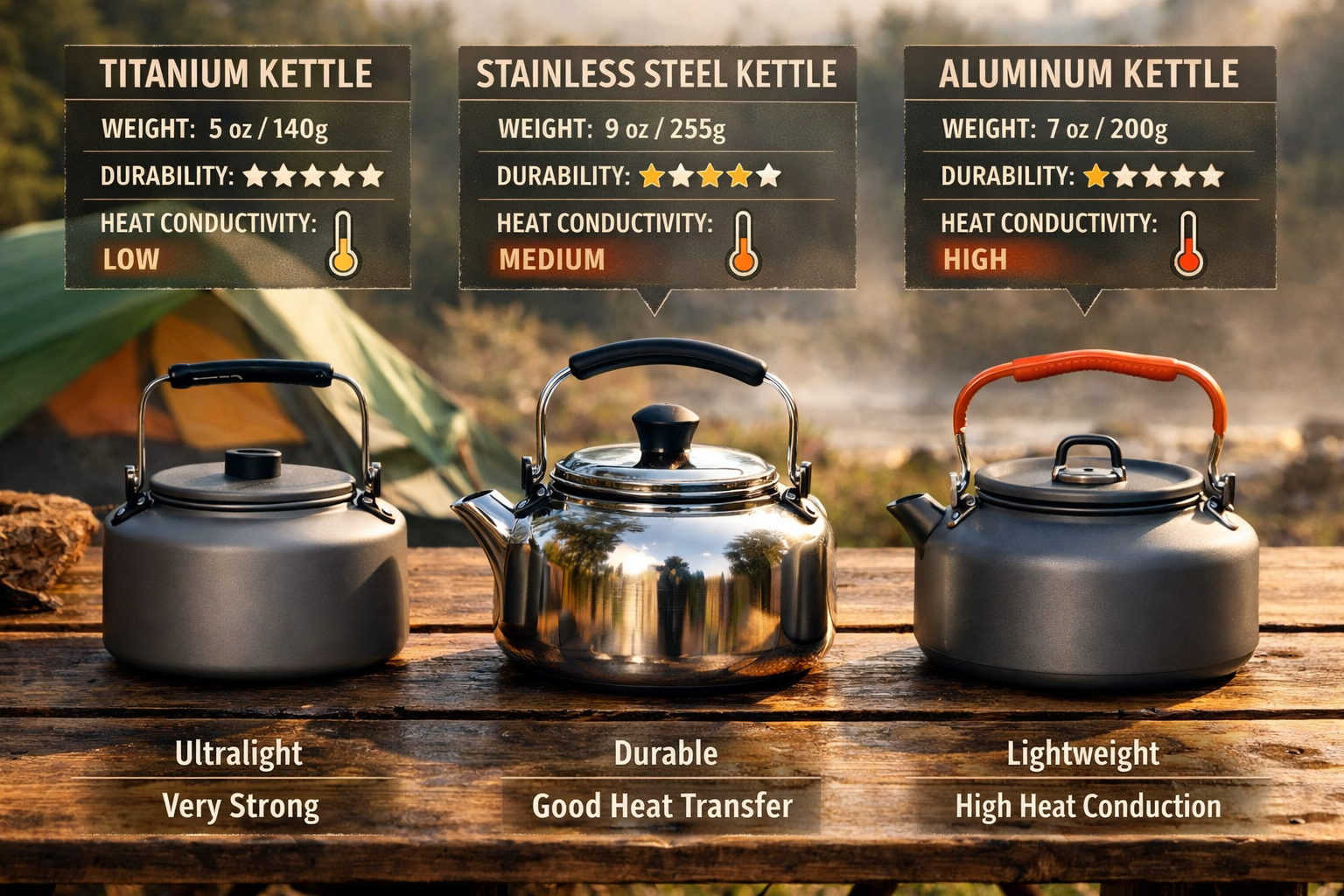
Transparency matters when discussing camping gear recommendations. Stainless steel kettles typically weigh more than titanium or aluminum alternatives—a consideration that impacts different camping styles differently.
For car camping and base camp scenarios, where you’re not carrying gear for miles, the extra ounces matter little compared to the durability benefits.
A typical 1.2L stainless steel kettle weighs around 0.66 pounds, while a comparable titanium model might weigh 0.45 pounds. That 3-4 ounce difference becomes negligible when you’re setting up camp a short walk from your vehicle.
However, for ultralight backpacking adventures where every ounce counts over 10+ mile days, you might consider whether the durability advantages justify the weight.
Many experienced outdoor skill workshops teach that gear selection should align with trip type, stainless steel for comfort-focused trips, titanium for weight-critical expeditions.
Cost-Effectiveness and Long-Term Value
The outdoor adventure community increasingly values sustainable and eco-friendly camping practices, and equipment longevity plays a crucial role.
While titanium kettles cost 2-3 times more than stainless steel options (often $80-150 versus $30-70), and aluminum kettles may seem cheaper initially, the durability of stainless steel often makes it the most economical choice over time.
A quality stainless steel tea kettle designed for camping can last decades with proper care, whereas aluminum alternatives may need replacement after just a few seasons of regular use. This longevity reduces waste and supports the growing movement toward sustainable outdoor recreation.
Selecting the Perfect Stainless Steel Camping Kettle: Essential Features and Considerations
Building outdoor skills includes developing the ability to evaluate gear critically. The camping gear market in 2026 offers numerous options, and understanding key features helps ensure your investment serves you well across countless camping events and wilderness experiences.
Capacity: Matching Size to Your Camping Community
Choosing the right capacity represents one of the most important decisions in kettle selection. Too small, and you’ll find yourself making multiple batches to serve your group; too large, and you’re carrying unnecessary weight and bulk.
Capacity Guidelines:
| Kettle Size | Ideal For | Typical Use Case |
|---|---|---|
| 0.8-1.2L | Solo campers or couples | Personal morning coffee/tea, instant meals |
| 1.3-1.6L | Small groups (2-3 people) | Shared beverages, basic cooking tasks |
| 1.8-2.2L | Larger groups (4-5 people) | Group meals, multiple servings, washing up |
The KingCamp 1.2L model, for instance, works beautifully for solo female camping or couples, while the Bulin 2.2L stainless steel camping kettle (which includes cups) serves group camping scenarios more effectively.
Consider your typical camping community size and whether you’ll use the kettle for cooking tasks beyond just boiling water.
Handle Design and Heat Safety
Handle construction separates exceptional kettles from mediocre ones. Look for these critical features:
Heat-resistant materials: Silicone-wrapped handles, bamboo grips, or stay-cool metal designs prevent burns when removing kettles from heat sources.
The KingCamp bamboo handle design, for example, provides both aesthetic appeal and functional heat protection.
Foldable or removable handles: Space-conscious designs allow handles to fold flat against the kettle body, reducing pack volume, a feature appreciated by anyone optimizing their backpack organization.
Secure attachment points: Handles should connect firmly to the kettle body with reinforced rivets or welds, not flimsy wire attachments that might fail under the weight of boiling water.
Lid Security and Spout Design
A secure lid isn’t just convenient—it’s a safety essential when working around campfires. Quality lids should:
- Fit snugly to prevent accidental spills
- Feature a knob or handle that stays cool
- Include a small vent to allow steam escape while preventing pressure buildup
- Attach via hinge or chain to prevent loss (optional but helpful)
Spout design affects both pouring control and cleaning ease. Wide spouts facilitate faster pouring and easier cleaning, while narrower spouts offer more precise control, similar to the precision found in whistling tea kettles designed for stovetop use.
Base Construction and Stability
The base of your camping kettle determines its stability on various heat sources. Look for:
Flat, wide bases that distribute weight evenly and resist tipping on uneven campfire grates or portable stoves. This becomes particularly important during outdoor skill development when you’re still mastering fire management.
Encapsulated or tri-ply bases (found in premium models) that improve heat distribution, reducing hot spots and preventing scorching. While this feature adds cost, it also improves efficiency—boiling water faster and using less fuel.
Compatibility markings indicating whether the kettle works with induction cooktops, gas stoves, electric burners, or open flames. Most stainless steel camping kettles handle all heat sources, but verification prevents disappointment.
Additional Features Worth Considering
Modern camping gear innovations have introduced several convenience features:
Built-in whistles: While less common in camping kettles than in stovetop models, some camping versions include whistles to signal when water reaches boiling—helpful when you’re occupied with other camp tasks.
Measurement markings: Internal volume indicators help with meal preparation and ensure you’re not overfilling the kettle.
Included accessories: Some models, like the Bulin 2.2L, come with stainless steel cups or storage bags, adding value for those building their camping gear collection from scratch.
Nesting capability: Kettles designed to nest with other cookware maximize pack efficiency—a feature valued in outdoor skill workshops teaching efficient gear organization.
Stainless Steel vs. Alternative Materials: Making an Informed Choice
The camping resources available in 2026 often present multiple material options without clearly explaining the trade-offs. Understanding how stainless steel compares to alternatives empowers confident decision-making aligned with your specific outdoor adventure goals.
Titanium: The Ultralight Premium Option
Titanium kettles represent the pinnacle of lightweight camping gear, weighing approximately 45% less than comparable stainless steel models. For example, a Toaks titanium kettle might weigh just 0.45 pounds compared to 0.66 pounds for a similar-capacity stainless steel version.
Titanium Advantages:
- ⚡ Exceptional strength-to-weight ratio
- ⚡ Faster heat transfer (quicker boiling times)
- ⚡ Corrosion resistance matching stainless steel
- ⚡ Ideal for long-distance backpacking
Titanium Disadvantages:
- 💰 Cost 2-3 times higher than stainless steel ($80-150 vs. $30-70)
- 🔨 Less dent-resistant despite high strength
- 🔥 Can develop hot spots without careful heat management
- 📊 Harder to find in larger capacities
For women camping who prioritize ultralight backpacking and have budget flexibility, titanium makes sense. However, for most camping for beginners scenarios and general outdoor recreation, stainless steel offers better value.
Aluminum: The Budget-Friendly Alternative
Aluminum camping kettles attract budget-conscious campers with their low prices and light weight. The Redcamp aluminum kettle, for instance, costs significantly less than stainless steel equivalents.
Aluminum Advantages:
- 💵 Lowest initial cost
- 🎒 Lighter than stainless steel
- 🔥 Excellent heat conductivity (fast boiling)
- 🛒 Widely available
Aluminum Disadvantages:
- ⚠️ Prone to dents and deformation
- 🦠 Can corrode in acidic or alkaline environments
- 👅 May impart metallic taste to water
- ♻️ Shorter lifespan requiring more frequent replacement
The camping community generally views aluminum as suitable for occasional use or extremely budget-limited situations, but not as a long-term investment in quality outdoor gear.
Silicone Collapsible: The Space-Saving Innovation
Collapsible silicone kettles like the Sea to Summit X-Pot represent innovative solutions to pack space challenges, folding nearly flat when not in use.
Silicone Advantages:
- 📦 Minimal pack space when collapsed
- 🪶 Very lightweight
- 🧽 Easy to clean
- 🎨 Available in multiple colors
Silicone Disadvantages:
- 🔥 Cannot be used directly over open flames (requires stove)
- ⏱️ Slower heating than metal options
- 💪 Less durable than metal kettles
- 🌡️ Limited temperature range
For camping lifestyle enthusiasts who primarily use portable stoves and value pack space above all else, collapsible options work well. However, they lack the versatility for bushcraft and open-fire camping that defines many outdoor adventures.
The Verdict: When Stainless Steel Wins
After comparing materials across multiple criteria, stainless steel camping kettles emerge as the optimal choice for:
✅ Base camping and car camping where weight isn’t the primary concern
✅ Rough outdoor conditions requiring maximum durability
✅ Open-fire cooking and bushcraft applications
✅ Long-term value and sustainable gear investment
✅ Camping for beginners building their first comprehensive gear kit
✅ Group camping requiring larger capacities
✅ Multi-season use across diverse environments
Using and Maintaining Your Stainless Steel Camping Kettle: Expert Tips for Longevity
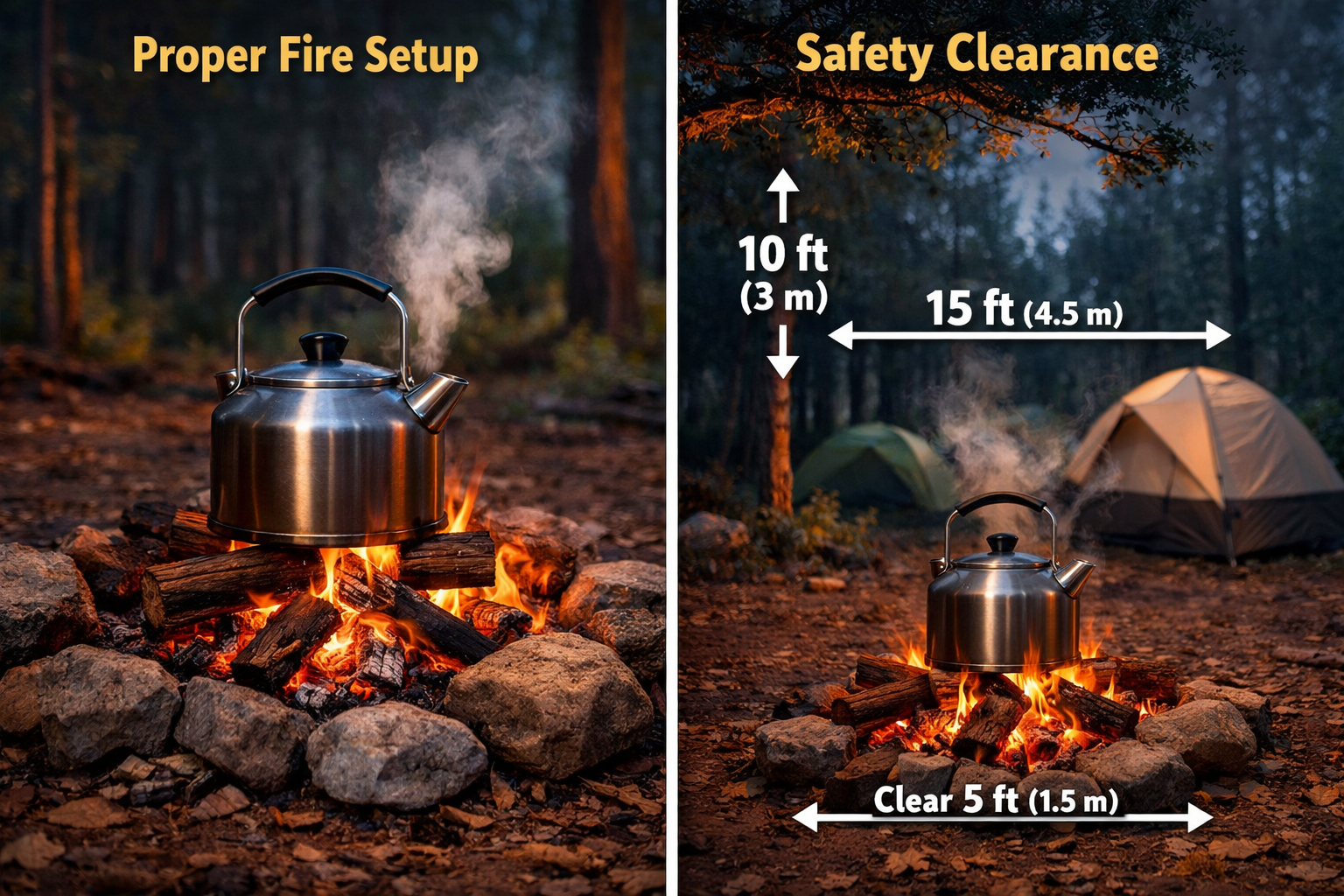
Outdoor empowerment includes mastering not just how to use gear, but how to care for it properly. A well-maintained Stainless Steel Camping Kettle can serve you faithfully for decades, becoming a trusted companion across countless camping events and wilderness experiences.
First-Use Preparation: Eliminating the New Kettle Taste
New stainless steel kettles sometimes carry manufacturing residues or a metallic taste. Before your first camping trip, prepare your kettle properly:
- Wash thoroughly with warm water and mild dish soap
- Boil water with vinegar (1:4 ratio vinegar to water) and let sit for 30 minutes
- Rinse completely and repeat if any taste remains
- Boil plain water 2-3 times, discarding each batch
This process, detailed in guides about eliminating new kettle taste, ensures your first wilderness cup of tea tastes perfect.
Campfire Cooking Techniques for Optimal Performance
Using your kettle over open flames requires different techniques than stovetop brewing:
Fire Placement Strategy:
- Position the kettle over hot coals rather than direct flames for more even heating
- Use a campfire grate or rocks to create stable support
- Maintain 2-3 inches clearance between flames and kettle bottom
- Avoid placing directly in flames, which can cause exterior discoloration
Safety Practices:
- Always use heat-resistant gloves or a cloth when handling
- Fill kettle before placing on heat (never heat empty)
- Keep the lid slightly ajar to prevent pressure buildup
- Position handle away from heat source when possible
Efficiency Tips:
- Start with warm water if available (reduces boiling time)
- Use a lid to retain heat and speed boiling
- Fill only to needed capacity (less water = faster boiling)
- Consider windbreaks to improve heating efficiency
Cleaning in the Wilderness: Practical Field Maintenance
Proper cleaning during camping trips prevents buildup and maintains water taste:
Daily Cleaning Routine:
- Empty remaining water while still warm
- Rinse thoroughly with clean water
- Wipe interior with a clean cloth
- Air dry completely before packing
Dealing with Soot and Discoloration:
Campfire use inevitably creates exterior soot. While this doesn’t affect performance, many campers prefer to maintain appearance:
- Wipe exterior while still warm (easier removal)
- Use a paste of baking soda and water for stubborn soot
- Accept that some discoloration is normal with fire use
- Focus cleaning efforts on interior and spout
Water Spots and Mineral Deposits:
Hard water can leave mineral deposits. Combat this with:
- Vinegar rinses (1:1 ratio with water, boil briefly)
- Lemon juice for natural descaling
- Gentle scrubbing with non-abrasive pads
- Regular descaling prevents buildup
Storage Best Practices for Off-Season Care
Proper storage between camping trips extends kettle life significantly:
Pre-Storage Preparation:
- Clean thoroughly and dry completely (prevents mold and odors)
- Remove or loosen lid to allow air circulation
- Store in a dry location away from moisture
- Consider placing a moisture-absorbing packet inside
Long-Term Storage Tips:
- Avoid storing with lid sealed tight
- Keep away from chemicals or strong-smelling items
- Periodically inspect for any corrosion (rare but possible)
- Store nested cookware loosely to prevent scratching
Troubleshooting Common Issues
Even quality kettles occasionally present challenges:
4 Issues:
1: Metallic Taste in Water
- Solution: Repeat vinegar boiling process; ensure thorough rinsing after cleaning
2: Discolored Interior
- Solution: Boil water with baking soda; use stainless steel cleaner for stubborn stains
3: Loose Handle
- Solution: Tighten any adjustable connections; consider professional repair if rivets are loose
4: Slow Boiling
- Solution: Descale interior; ensure adequate heat source; check for exterior soot blocking heat transfer
Extending Lifespan Through Mindful Use
The outdoor skills training community emphasizes that gear longevity comes from mindful practices:
- Avoid thermal shock: Don’t plunge hot kettles into cold water
- Use appropriate utensils: Avoid metal utensils that might scratch interior
- Pack carefully: Cushion your kettle to prevent impact damage during transport
- Regular inspection: Check for damage after each trip to address issues early
Building Your Complete Camping Kitchen: Complementary Gear and Accessories
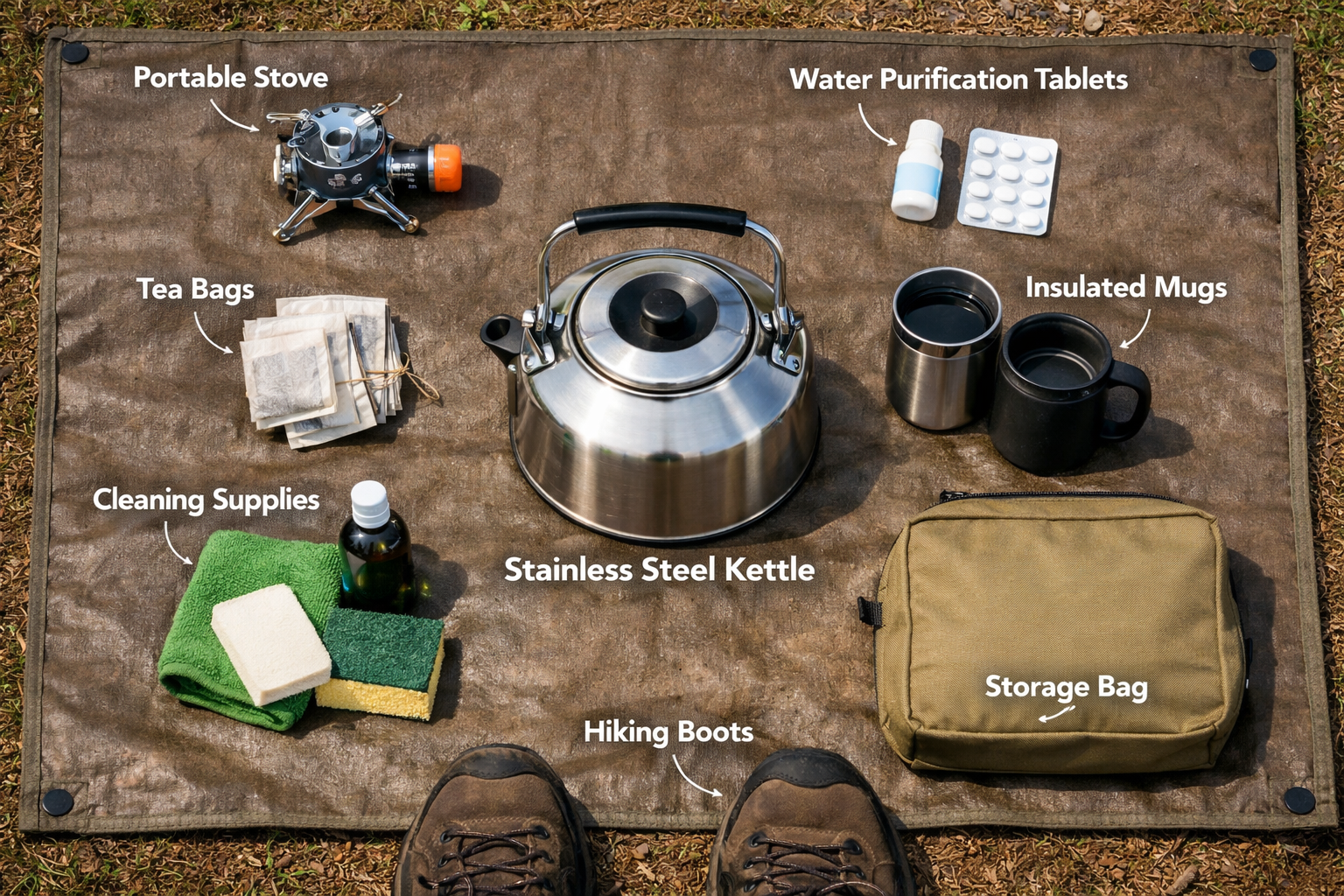
The camping lifestyle extends beyond a single piece of equipment. Creating a functional outdoor kitchen involves thoughtfully selecting complementary gear that works harmoniously with your Stainless Steel Camping Kettle.
Essential Companions for Your Camping Kettle
Portable Stove Options:
While your stainless steel kettle excels over campfires, having a portable stove provides flexibility:
- Canister stoves (compact, easy to use, ideal for beginners)
- Liquid fuel stoves (better cold-weather performance)
- Wood-burning stoves (sustainable, no fuel to carry)
- Multi-fuel stoves (maximum versatility)
Your kettle’s compatibility with all heat sources makes it adaptable to any stove type, supporting outdoor skill development as you experiment with different cooking methods.
Insulated Mugs and Cups:
Maximize your hot beverage enjoyment with quality drinkware:
- Stainless steel insulated mugs maintain temperature longer
- Collapsible silicone cups save pack space
- Traditional enamel camping mugs offer nostalgic charm
- Consider one mug per person plus one spare
Water Filtration and Purification:
Safe water is fundamental to outdoor adventure:
- Portable water filters for stream and lake water
- Purification tablets as backup
- UV sterilization devices for convenience
- Pre-filtering before boiling improves taste and efficiency
Creating a Functional Camp Kitchen Setup
Organizing your camping gear effectively transforms meal preparation from chaos to enjoyment:
The Kitchen Box Approach:
Many experienced campers use a dedicated container for cooking gear:
- Nest smaller items inside your kettle to save space
- Include: utensils, seasonings, cleaning supplies, matches
- Label clearly for easy identification
- Keep separate from food storage to prevent contamination
Cooking Station Setup:
At camp, create an efficient workspace:
- Designate a flat, stable surface for food prep
- Position cooking area downwind from sleeping areas
- Maintain 10+ feet distance from tents (fire safety)
- Create a cleaning station separate from cooking
Leave No Trace Principles:
The camping community in 2026 strongly emphasizes environmental responsibility:
- Pack out all trash, including food scraps
- Use biodegradable soap at least 200 feet from water sources
- Properly dispose of gray water (strain food particles first)
- Minimize campfire impact by using established fire rings
Seasonal Considerations and Adaptations
Different seasons require different approaches to outdoor cooking:
Winter Camping:
- Insulate kettle base from snow using a pad or platform
- Expect longer boiling times in cold temperatures
- Keep kettle inside sleeping bag overnight to prevent freezing
- Consider a larger capacity for melting snow
Summer Camping:
- Take advantage of faster boiling times
- Use kettle for cold-soaking foods to save fuel
- Ensure adequate hydration support (larger capacity helpful)
- Clean more frequently in warm weather to prevent bacterial growth
Spring/Fall Shoulder Seasons:
- Prepare for variable weather conditions
- Pack backup fuel in case of wet wood
- Appreciate moderate temperatures for comfortable cooking
- Watch for rapidly changing weather affecting fire safety
Budget-Friendly Gear Building Strategy
For camping for beginners concerned about costs, build your kitchen gradually:
Priority 1 (Essential):
- Quality stainless steel camping kettle ($30-70)
- Basic portable stove ($20-50)
- Water purification method ($15-40)
- One insulated mug per person ($10-25 each)
2 (Helpful):
- Cooking utensils set ($15-30)
- Collapsible water container ($10-20)
- Biodegradable soap and cleaning supplies ($10)
- Compact cutting board ($8-15)
3 (Convenience):
- Additional cookware (pot, pan) ($30-60)
- Spice kit ($15-25)
- Coffee/tea brewing accessories ($10-30)
- Advanced water filtration ($50-100)
This phased approach prevents overwhelming initial costs while ensuring you have essentials for safe, enjoyable camping experiences.
Real Stories from the Trail: How Stainless Steel Camping Kettles Build Outdoor Confidence
The camping inspiration that drives the outdoor empowerment movement often comes from personal stories of transformation.
These narratives from the women’s outdoor community illustrate how something as simple as a reliable camping kettle contributes to building camping confidence and fostering deeper connections with nature.
Sarah’s Solo Camping Journey
Sarah, a 32-year-old graphic designer from Portland, never considered herself outdoorsy. “I grew up thinking camping was for other people—people who were naturally adventurous or athletic,” she recalls. Her entry into solo female camping began with a women-focused outdoor adventure workshop in 2024.
“The instructor emphasized starting with quality basics rather than cheap gear that might fail,” Sarah explains. “I invested in a KingCamp 1.2L stainless steel kettle, and honestly, it became my comfort object on that first solo trip.”
That first morning alone in the wilderness, Sarah’s hands shook as she built her fire. “But when I successfully boiled water and made my coffee, something shifted. It sounds small, but that hot cup of coffee I made myself, in the woods, with fire I built—it proved I could do this.”
Two years later, Sarah has completed over 20 solo camping trips and now mentors other women through the same outdoor skills training program where she started. “I still use that same kettle. It’s got some fire marks and a small dent from when I dropped it on a rock, but those are badges of honor now. Each mark tells a story.”
The Mother-Daughter Camping Tradition
Maria and her daughter Elena represent cross-generational camping knowledge transfer in action. When Elena turned 13, Maria decided to create a new tradition: annual camping trips, just the two of them.
“I wanted to give her skills and confidence that I didn’t have at her age,” Maria shares. “We started with car camping at established campgrounds, and our Bulin 2.2L stainless steel kettle became the centerpiece of our camp kitchen.”
The larger capacity kettle served multiple purposes: morning hot chocolate, afternoon tea, evening cleanup water, and even warming water for washing up. “Elena learned to manage the fire, to time the boiling, to safely handle hot water—practical skills wrapped in quality time together,” Maria explains.
Now 18, Elena credits those camping experiences with shaping her confidence and independence. “Mom taught me that being capable outdoors translates to being capable everywhere. And weirdly, I associate that lesson with our camping kettle—this reliable thing that worked every single time, no matter what.”
The camping community aspect extends beyond individual achievements to collective experiences. The “Girl Camper” movement has created regional chapters where women gather for group camping events, sharing knowledge and building friendships.
Jessica, who organizes a Northern California chapter, notes that gear discussions often spark deeper conversations. “Someone will ask about choosing a camping kettle, and suddenly we’re talking about overcoming fear, about trusting ourselves, about what outdoor empowerment really means.”
At a recent camping event, the group of twelve women brought various kettles—stainless steel, aluminum, titanium, even a collapsible silicone model. “We did an informal comparison, testing boil times, discussing durability, sharing tips,” Jessica recalls. “But more importantly, we shared stories. The gear became a vehicle for connection.”
The consensus? Most participants preferred stainless steel for group camping scenarios. “The durability matters when you’re passing the kettle around, when different people with different skill levels are using it. You need something forgiving that won’t dent if someone sets it down too hard or accidentally bumps it.”
Overcoming Anxiety Through Skill Development
For some women, outdoor adventures represent a path to managing anxiety and building mental resilience.
Dr. Rachel Thompson, a therapist who leads trauma-informed outdoor skill building programs, explains: “There’s something profoundly therapeutic about mastering practical skills in nature.
It grounds people in the present moment and provides tangible evidence of capability.”
Participants in her programs start with basic tasks: setting up a tent, building a fire, boiling water. “That last one—boiling water—seems almost too simple to matter,”
Dr. Thompson notes. “But it requires managing fire, understanding heat, practicing patience, and executing a complete task from start to finish. The sense of accomplishment is real.”
She specifically recommends stainless steel camping kettles for her programs: “Durability reduces anxiety.
When someone is already nervous about outdoor skills, the last thing they need is fragile equipment that might fail.
Stainless steel forgives mistakes and builds confidence through reliability.”
The Future of Camping Gear: Trends and Innovations for 2026 and Beyond
As the outdoor recreation industry continues evolving, understanding emerging trends helps make informed gear decisions that remain relevant for years to come.
The Stainless Steel Camping Kettle market reflects broader shifts in outdoor empowerment, sustainability, and technology integration.
Sustainability and Eco-Friendly Camping Practices
The camping lifestyle in 2026 increasingly emphasizes environmental responsibility. The global stainless steel kettles market, valued at $3.31 billion in 2024 and projected to reach $4.26 billion by 2032, reflects growing consumer preference for durable, sustainable products over disposable alternatives.
Key Sustainability Trends:
- Buy-it-for-life mentality: Campers increasingly choose quality gear that lasts decades rather than cheap items requiring frequent replacement
- Multi-purpose design: Equipment that serves multiple functions reduces overall gear volume and resource consumption
- Recyclable materials: Stainless steel’s infinite recyclability appeals to environmentally conscious outdoor enthusiasts
- Local manufacturing: Growing interest in domestically produced gear to reduce transportation emissions
Stainless steel camping kettles align perfectly with these values, offering longevity and recyclability that support sustainable outdoor recreation.
Technology Integration in Traditional Gear
While camping often represents an escape from technology, smart integrations are emerging that enhance rather than detract from the outdoor experience:
Emerging Innovations:
- Temperature-indicating handles that change color when hot
- Integrated water quality sensors (still in development)
- QR codes linking to care instructions and recipe ideas
- RFID tags for gear tracking and inventory management
However, the camping community generally resists over-complication of simple, reliable gear. The consensus favors traditional designs with thoughtful improvements over gadget-heavy alternatives.
Inclusive Design and Adaptive Equipment
The outdoor empowerment programs of 2026 increasingly recognize that traditional gear doesn’t serve all body types, abilities, and needs equally. Manufacturers are responding with more inclusive designs:
Adaptive Features:
- Ergonomic handles designed for various grip strengths
- Capacity options for different group sizes and needs
- Weight variations accommodating different carrying abilities
- Visual and tactile indicators for accessibility
This intersectional approach to camping experiences ensures that outdoor adventures become accessible to broader communities, not just traditional demographics.
The Resurgence of Bushcraft and Traditional Skills
Paradoxically, as technology advances, interest in traditional bushcraft and wilderness preparation skills has surged. This movement values equipment that supports old-school outdoor techniques:
Bushcraft-Friendly Features:
- Open-fire compatibility (essential for traditional cooking)
- Durable construction withstanding primitive conditions
- Simple, repairable designs without complex mechanisms
- Versatility for multiple cooking and heating tasks
The Stainless Steel Camping Kettle perfectly serves this trend, offering the reliability and versatility that bushcraft practitioners demand.
Community-Driven Product Development
The women’s outdoor community and broader camping resources networks increasingly influence product design through direct feedback to manufacturers. Brands that engage with camping events and outdoor skill workshops gain insights that shape future products:
Community Input Driving Changes:
- Wider handle designs for gloved hands
- Improved nesting capabilities based on real packing challenges
- Color-coding options for group camping organization
- Capacity markings in both metric and imperial measurements
This collaborative approach ensures gear evolves to meet actual user needs rather than manufacturer assumptions.
Conclusion: Your Path to Confident Outdoor Adventures Starts Here
The journey into the camping lifestyle begins with a single step, or in this case, a single piece of reliable gear.
A quality Stainless Steel Camping Kettle represents far more than a vessel for boiling water; it symbolizes the commitment to outdoor skill development, the embrace of camping confidence, and the investment in countless future memories under open skies.
Whether you’re drawn to solo female camping adventures, seeking to build connections through the camping community, or simply wanting to develop practical outdoor skills, the right equipment makes all the difference.
Stainless steel offers the durability, versatility, and long-term value that supports your growth from camping for beginners to experienced outdoor enthusiast.
Your Next Steps: Taking Action
Immediate Actions:
- Assess your camping style: Determine whether you’ll primarily car camp, backpack, or engage in bushcraft activities
- Choose your capacity: Select kettle size based on typical group size (1.2L for solo/couples, 1.6-2.2L for groups)
- Set your budget: Quality stainless steel camping kettles range from $30-70—invest in the best you can afford
- Research specific models: Compare features like handle design, lid security, and included accessories
- Make your purchase: Invest in your stainless steel camping kettle and begin your outdoor adventure
Building Skills:
- Join local outdoor skill workshops or women-focused outdoor adventure groups
- Practice using your kettle in controlled environments before wilderness trips
- Connect with the camping community through social media groups and camping events
- Document your experiences to track skill development and build confidence
Long-Term Planning:
- Create a gear acquisition timeline for building your complete camping kitchen
- Schedule regular camping trips to maintain and develop skills
- Consider mentoring others as your confidence grows, contributing to outdoor empowerment
- Explore diverse camping environments to expand your capabilities
The Bigger Picture: Outdoor Empowerment and Personal Growth
The outdoor recreation movement of 2026 recognizes that camping teaches lessons extending far beyond wilderness survival. Managing a campfire, boiling water in a reliable kettle, and successfully completing a camping trip builds confidence that transfers to every life area.
For women entering outdoor spaces, each successful camping experience challenges societal narratives about who belongs in wilderness areas. Every cup of tea brewed over a campfire you built represents a small act of empowerment, a quiet declaration of capability.
The camping inspiration that drives thousands to seek nature exploration isn’t about escaping life—it’s about engaging with it more fully. It’s about discovering that you’re more capable than you imagined, more resilient than you knew, more connected to the natural world than modern life typically allows.
Final Thoughts: The Kettle as Symbol
In the end, your Stainless Steel Camping Kettle becomes more than equipment. It becomes a trusted companion, a reliable friend that’s there for every sunrise, every contemplative evening, every moment of triumph and every lesson learned through challenge.
All will witness your growth from nervous beginner to confident outdoor enthusiast. It will serve tea to new friends made around campfires. They will warm your hands on cold mornings and fill your cup during celebrations of successful summits.
Choose wisely, care for it well, and let it accompany you on the adventures that await. The wilderness is calling, and you have everything you need to answer with confidence.
Your outdoor adventure story begins now. Make it extraordinary. 🏕️