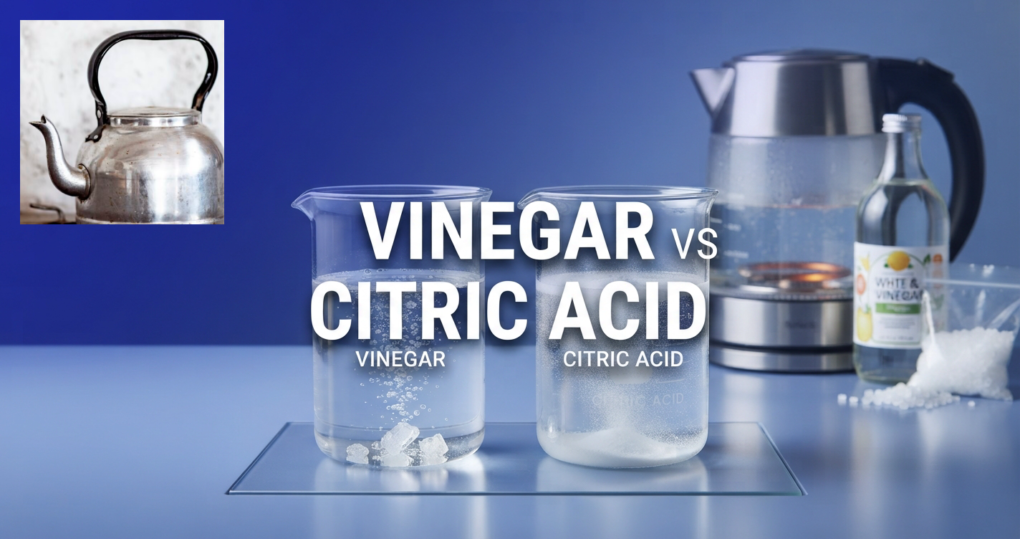
Vinegar vs Citric Acid
Latest Update: November 23, 2026
Vinegar vs Citric Acid: Which Descale Fits Your Kettle? We compare how each works, how to use it carefully, and which option fits your kettle care routine. Both can dissolve limescale, but your kettle maker’s instructions and your tolerance for lingering vinegar odor should guide the choice.
Key Takeaways
| Question | Quick answer |
|---|---|
| Is citric acid or vinegar better for descaling? | Both can dissolve calcium carbonate scale. Choose the method permitted by your kettle maker, then consider whether vinegar odor matters to you. |
| What vinegar can you use? | Choose plain white vinegar when its smell is acceptable. Avoid malt or strongly flavored vinegar if residual taste or odor is a concern. |
| Will citric acid remove kettle limescale? | Yes, citric acid can dissolve mineral deposits when the kettle instructions allow its use. |
| How much solution should I use? | Follow the kettle maker’s directions. Use enough liquid to cover the scale, while keeping the level below the maximum fill mark. |
| How often should I descale? | Inspect more often in hard water and descale when visible buildup appears. One schedule does not suit every home. |
| What should I do after descaling? | Rinse thoroughly, remove loosened flakes, then boil and discard fresh water before making a drink. |
What kettle limescale is and why it builds up
Limescale forms when hard water leaves mineral deposits inside a kettle. The deposits consist mainly of calcium carbonate, which collects as water heats and evaporates, often leaving a white or chalky layer on the kettle floor and around the heating element.
Descaling dissolves those mineral deposits. General cleaning removes surface grime and residue, so baking soda is not an equivalent acid based treatment for limescale, even though it can help with some ordinary cleaning tasks.
Scale on the heating surface can slow heat transfer from the element to the water. Removing buildup helps the kettle heat effectively and keeps mineral flakes from floating into a cup.
When a stainless steel kettle develops visible white scale, focus on dissolving the deposit rather than scraping it away. Our guide to removing limescale from a stainless steel kettle covers the buildup and careful cleaning approach in more detail.


How vinegar and citric acid compare
Is Vinegar vs Citric Acid better for descaling? Both can dissolve calcium carbonate scale, but they suit different preferences.
Vinegar contains acetic acid and is a familiar kitchen option, while citric acid is useful when you want to avoid a lingering vinegar smell.
Choose citric acid when residual odor is your main concern. Choose plain white vinegar when it is the more practical option for you and its distinctive smell is acceptable.
Convenience and cost depend on what you already have. White vinegar is easy to use when it is already in your cupboard, but its smell may mean extra rinsing.
Citric acid powder avoids that odor and is compact to store, though you may need to buy it specifically for descaling.
Compare the amount used per treatment and whether you will use the rest, rather than comparing container prices alone.
Neither acid is automatically faster: scale thickness and the treatment your kettle permits matter more, and stubborn deposits may need another permitted treatment.
There is no single solution amount or contact time that fits every kettle. The kettle’s capacity, the amount of scale, and its materials and components all matter, so use the maker’s instructions to choose the method and solution strength.
A stainless steel tea kettle and an electric kettle with different internal components may have different care requirements. Read the descaling section of the manual, including any warranty guidance, before adding vinegar or citric acid.
Our electric kettle descaling and cleaning guide explains the difference between removing mineral deposits and cleaning the kettle’s other surfaces. Never combine an acid descaler with bleach or chlorine based cleaners.

How to descale a kettle with citric acid
To descale a kettle with citric acid, dissolve it in water if the kettle maker’s directions call for a solution.
Add enough liquid to cover the visible scale, and keep the level below the maximum fill mark so the solution does not overflow when heated.
The amount depends on the kettle instructions and the treatment being used. Avoid increasing the strength to tackle stubborn scale unless the maker’s directions allow it, since a stronger solution is not automatically suitable for every kettle.
Heat or soak the citric acid solution only as the kettle instructions allow. If the method involves heating, stay with the kettle and do not leave the solution unattended.
For a controlled treatment, dissolve the citric acid fully before heating. If the kettle maker allows heating, follow its heating directions; if it specifies a soak instead, use that contact period.
When heating is allowed but no separate soak is specified, switch the kettle off and empty the solution once it has cooled enough to handle.
Do not extend the treatment or make the solution stronger to compensate for stubborn scale.
For a concrete reference, Tiger Corporation gives a measured citric acid method for a kettle.

The guide recommends adding approximately 30g (2 to 3 tablespoons) of citric acid directly into the kettle.
Source: Tiger Corporation
Treat the measured amount shown here as a reference for the cited method, not a universal dose for every kettle. Capacity, the amount of scale, and the maker’s directions affect how much solution is suitable.
Do not scale the dose up just because deposits look heavy; use a permitted method that covers the scale while staying below the maximum fill mark.
After treatment, empty the solution and rinse the kettle thoroughly. Boil a fresh fill of plain water and discard it before making a drink, so loosened scale and any remaining citric acid do not carry into your cup.

How to descale with white vinegar
Plain white vinegar is the usual choice when using vinegar to descale a kettle. Malt and strongly flavored vinegars can leave a more noticeable taste or odor, so distilled white vinegar is the more practical option when you want a neutral finish.
Dilute the vinegar and heat or soak the solution only as your kettle instructions allow. Use enough to reach the scale without going above the maximum fill level, and never leave a heating solution unattended.
You can use white vinegar diluted with water, not straight vinegar, and prepare only enough to cover the scale while staying below the maximum fill mark.
Use the dilution and heating method permitted by the kettle maker. If heating is allowed, switch the kettle off and let the solution cool before emptying; if the maker specifies a soak, follow that contact period instead.
Do not leave the solution longer than the maker allows. This gives you a clear endpoint without assuming the same mix or treatment time suits every kettle.
Vinegar can dissolve mineral deposits and limescale buildup, but the method depends on the appliance instructions, the solution strength, and the allowed contact time. Rinse well afterward, then boil and discard fresh water if vinegar odor remains.
The Vinegar Method is a descaling approach that uses vinegar to remove mineral deposits and limescale buildup. It suits this comparison because it focuses on the household acid option and the practical steps needed to clear scale.
Rinse the kettle and clean its filter
When the treatment is complete, empty the used solution and rinse the kettle thoroughly with fresh water. Boil and discard a fresh fill before using the kettle for drinks, which helps clear remaining acid, taste, odor, and loosened residue.
If your kettle has a removable filter, take it out only if the maker’s instructions allow. Rinse away loose deposits and gently clean the filter with a soft cloth or brush, since abrasive tools can damage its surface.
Check the kettle floor, spout, and filter for loosened flakes before refilling. Avoid abrasive pads on the heating surface, because they can scratch or damage the finish.
Rinsing is an essential part of descaling, not an optional finishing touch. If the kettle still has a noticeable residual taste or odor, rinse it again and boil another fresh fill of water, then discard it.
Set a safe descaling routine
In hard water areas, inspect the kettle more often and descale when visible buildup appears. Water hardness and kettle use vary from home to home, so a fixed interval cannot suit every daily ritual.
If scale remains after treatment, follow the kettle instructions for another suitable treatment instead of scraping the heating surface. A soft cloth can help clear loose flakes, but it cannot replace a descaler that dissolves firmly attached mineral deposits.
Consider a commercial kettle descaler when the maker recommends one or household acids are unsuitable for your kettle. Follow its directions for solution amount, contact time, and rinsing, since products and kettle components can differ.
- Keep the solution below the maximum fill mark.
- Stay with the kettle if the instructions allow heating the solution.
- Do not combine an acid descaler with bleach or chlorine based cleaners.
- Use only the method permitted by the kettle maker.
- Rinse fully before returning the kettle to normal use.
Vinegar vs Citric Acid: Which Descale Fits Your Kettle? The best choice is the one your kettle instructions allow and that you can rinse away comfortably.
A reliable routine starts with checking for visible scale, choosing a compatible treatment, and protecting the heating surface from scraping.
Frequently Asked Questions
What should I do if scale remains after the first treatment?
Inspect the stubborn patch in good light and compare its appearance with the surrounding kettle surface. If the mark persists after a treatment allowed by the maker, contact the kettle maker to help distinguish mineral scale from a change in the surface finish.
Can I use lemon juice instead of citric acid to descale a kettle?
Use lemon juice only when the kettle instructions allow it, and strain it first to remove pulp that could lodge around the spout or filter. Its fruit aroma can linger, so it may take more rinsing to leave the kettle neutral than a measured powder solution.
Can I leave citric acid solution in a kettle overnight?
An overnight soak is not automatically more effective than the contact time in the kettle instructions. Do not store a used solution in the kettle for later, since fresh preparation gives you a clean, controlled treatment.
Can I mix vinegar and citric acid in one treatment?
No, use one descaler at a time. Combining two acids makes the total strength harder to control and gives you no clear advantage over choosing one method that the kettle maker permits.
Does descaling remove rust stains from a kettle?
Descaling targets mineral scale, not rust staining. A rust colored mark can have a different cause, so identify whether it is a deposit or a change to the kettle surface before choosing a cleaning method.
Conclusion
Vinegar vs Citric Acid can both dissolve kettle limescale, but odor, convenience, and kettle compatibility make the difference. Choose plain white vinegar when its smell is acceptable, or citric acid when you prefer to avoid a lingering vinegar odor.
For Vinegar vs Citric Acid: Which Descale Fits Your Kettle?, the kettle maker’s directions are the best guide to solution amount, heating, and contact time.
Rinse thoroughly, remove loose scale from the filter and kettle, and boil and discard fresh water before making your next cup.





Pingback: Descale Fellow Kettle: Step by Step Cleaning Guide
Pingback: Lenox Chef Snoopy Enamelware Tea Kettle: Features and Buying Guide - Stainless Steel Tea Kettles
Pingback: How to Descale and Clean an Electric Tea Kettle - Stainless Steel Tea Kettles