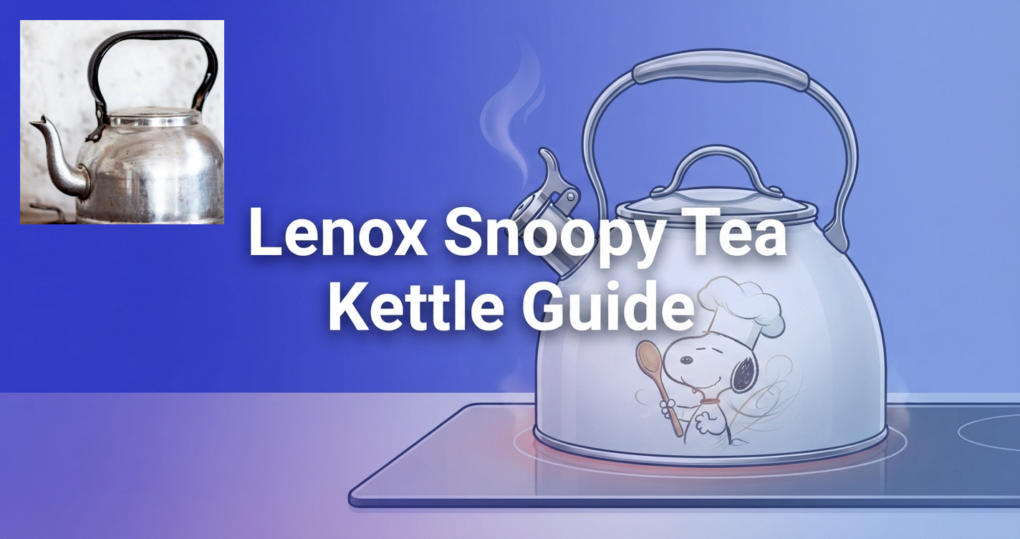
Lenox Chef Snoopy Enamelware Tea Kettle
Latest Update: November 16, 2026
The Lenox Chef Snoopy Enamelware Tea Kettle brings a character design into a practical kitchen item, but its decoration is only one part of a good buying decision. We explain how to assess its materials, dimensions, stovetop compatibility, care needs, and what to consider before choosing a kettle.
Key Takeaways
| Question | What to know |
|---|---|
| What is distinctive about its design? | The Chef Snoopy theme features Snoopy and Woodstock as decorative character art. |
| What does enamelware mean? | Enamelware has a glasslike coating fused to a metal body. The finish alone does not establish which stovetops a kettle can use. |
| What should we compare before choosing? | Check the kettle dimensions, capacity, handle shape, lid fit, and spout design against your everyday needs. |
| How should we care for it? | Use gentle hand washing, avoid hard knocks and sudden temperature changes, and stop using it if the enamel is damaged inside. |
| How is it different from the teapot? | The kettle heats water. The separate porcelain teapot is intended for serving brewed tea. |
| Where can we find a purchase option? | View the Lenox Chef Snoopy kettle purchase listing. |
What the Lenox Chef Snoopy Enamelware Tea Kettle offers
A character design can make a kettle a visible kitchen item or a themed gift for someone who enjoys the characters. It can suit a kitchen where the tea kettle is meant to be both useful and visible, or work as a themed gift for someone who enjoys the characters.
We recommend considering the artwork alongside the practical details. Look at the overall profile, the way the lid sits, the shape of the handle, and how easily the spout can pour into your usual cups.

The Lenox Chef Snoopy Tea Kettle is best considered as a water heating kettle, not simply as a decorative piece. How it fits your routine depends on its capacity, how comfortably you can lift it when full, and whether its spout pours neatly.
Enamelware and stainless steel, what the materials mean
Enamelware uses a glasslike coating fused to a metal body. The coating provides a smooth, finished surface, while the metal underneath gives the item its structure.
Stainless steel is a metal, not the enamel finish itself. When comparing kettle materials, distinguish the visible enamel coating from the body and any metal components, since those details affect weight, care, and compatibility with a heat source.
The word enamelware does not by itself guarantee that a kettle works on every stovetop. For an enamel on steel kettle, induction use depends on the construction of its base and the maker’s instructions, so do not infer induction compatibility from the enamel finish alone.
For a fuller explanation of enamel construction and practical care, read our guide to enamel on steel kettle construction and care.
How to assess kettle dimensions and capacity
The right kettle capacity depends on how much hot water you make at once. Consider whether you usually prepare one or two drinks, serve several people, or need hot water for cooking as well as tea.
Compare the stated dimensions with the space where you plan to keep the kettle and the clearance above your stovetop. A wide body can take up more storage space, while a tall kettle may need more room beneath a shelf or cabinet.
Do not plan to fill a kettle right to the top. Leave room below the spout opening so water does not spill while heating or pouring, and consider the weight of the filled kettle before choosing a size.
When choosing a kettle, weigh its practical dimensions against its decorative appeal. A kettle that is easy to lift, pour, and store is more likely to work well as an everyday item.
Stovetop compatibility, spout, lid, and safe handling
Stovetop compatibility is a model specific feature, not a general property of enamelware. Use the maker’s instructions for the exact kettle to establish which heat sources are approved, especially if you plan to use an induction hob.
Check how the lid fits and whether the spout has a cover or a whistle mechanism. The name tea kettle does not establish that it whistles, so use the product description and the physical design to understand how it signals that water is boiling.
For regular use, make sure the handle gives you a steady grip and that the lid is easy to lift without placing your hand over the steam path. Treat the handle, lid knob, and spout as hot during and after heating, and use a dry cloth or mitt when handling them.
- Fill the kettle with enough room below the spout opening.
- Keep the handle turned away from the edge of the stovetop to reduce the chance of a bump.
- Pour slowly, keeping fingers clear of the spout and steam.
- Set the lid down securely after filling, and avoid lifting it toward your face.
How to clean and care for enamelware
Hand wash the kettle with mild dish soap, warm water, and a soft sponge. Abrasive pads and gritty cleaners can scratch the enamel surface, while forceful impacts can chip it.
Let the kettle cool before washing it. Sudden temperature changes, such as adding cold water to a hot kettle, can stress enamel and increase the chance of damage.
For mineral deposits, soak the affected area with warm water and a little white vinegar, then rinse thoroughly. Dry the kettle after washing, including around the lid and spout, to limit water marks and residue.
Inspect the enamel from time to time, particularly around the rim, interior, and spout. If the coating chips inside or exposes the metal beneath, stop using the kettle for heating water, since the damaged area can worsen with repeated heating and cleaning.
Gentle hand washing gives you more control over impacts and contact with other dishes.
Kettle or porcelain teapot, and how it fits the collection
A kettle heats water, while a teapot is intended for serving brewed tea.
Choose a kettle when you want to heat water and value an enamelware design. Choose a teapot for serving brewed tea at the table.
When choosing related kitchen pieces, focus on how their decoration and intended use fit your kitchen.
What to consider when buying
When reading reviews, distinguish comments about a kettle from those about a teapot. Compare comments about finish, lid components, and durability.
When an item arrives, check the lid carefully, make sure it sits securely, and inspect the enamel before using the kettle.
There is no single review detail that should decide the purchase. The decoration may be the main attraction, but capacity, handling, care, and the condition of the lid are more important for judging how well a kettle will serve its owner.
Conclusion
The Lenox Chef Snoopy Enamelware Tea Kettle combines a character design with the everyday task of heating water.
We recommend weighing its appearance against capacity, dimensions, stovetop compatibility, handling, and the care enamelware needs.
Keep its purpose distinct from the porcelain teapot, which serves brewed tea rather than heating water. With careful hand washing and attention to the lid, topper, and enamel surface, the Lenox Snoopy Tea Kettle can be considered for either regular use or a character themed gift.
Frequently Asked Questions
Were Lenox tea kettles recalled?
Check official recall notices using the exact product identification.
What is the highest rated tea kettle?
Ratings vary by model and reviewer, so compare written feedback about the features that matter to you rather than relying on a score alone.
Can I put loose tea leaves inside the kettle?
Use a tea kettle to heat water, then steep loose leaves in a teapot or infuser. This keeps tea residue out of the kettle and makes it easier to clean after use.
Can I remove the figural lid topper for cleaning?
Follow the product instructions before removing any lid component. Clean around fixed parts gently with a soft sponge, and dry the area after washing.
Can I heat milk or soup in the kettle?
Use the kettle for water rather than milk or soup. Other liquids can leave residue inside the spout and body, and a kettle is harder to clean thoroughly when food matter has been heated in it.
How should I wrap the kettle as a gift?
Protect the lid from pressure, cushion the spout and handle, and keep the kettle upright in a box so the enamel surface does not strike hard objects during transport.
Are there any tea kettles to avoid?
Avoid kettles with chipped or cracked enamel on the inside, loose handles or lids, or spouts that pour unpredictably. Also avoid using a kettle on a heat source unless it is approved for that model.





Pingback: Circulon Enamel on Steel Whistling Induction Teakettle: Buying Guide - Stainless Steel Tea Kettles
Pingback: Best Tea Kettle For Induction Stove: How to Choose the Right One - Stainless Steel Tea Kettles