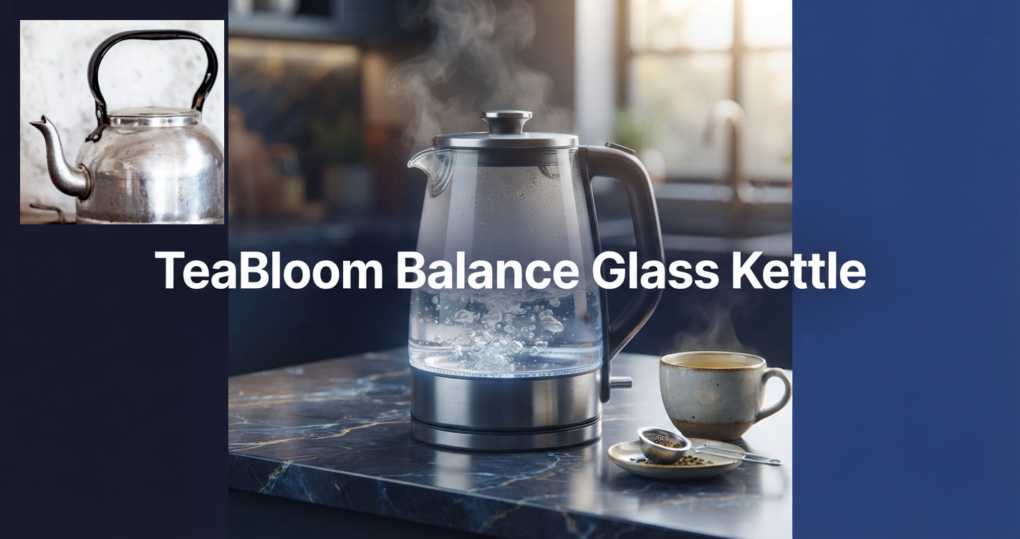
TeaBloom Balance Borosilicate Glass Kettle
Latest Update: October 24, 2026
The TeaBloom Balance Borosilicate Glass Kettle is best assessed by looking closely at its intended job, brewing features, capacity, and heating method. Understanding how a glass teapot differs from an electric kettle makes it easier to choose a vessel that fits your tea routine.
Key Takeaways
- A teapot is for steeping and serving tea, while an electric kettle heats water on a powered base.
- Borosilicate glass handles temperature changes better than ordinary soda lime glass, but it can still break.
- A removable stainless steel infuser makes it easier to lift out tea leaves after steeping.
- Choose capacity by the number and size of your usual servings, and leave room below the rim.
- Use glass on a burner only when the vessel is designed for direct stovetop heating.
- For a wider look at water heating features, read our guide to temperature control in glass electric kettles.
First distinguish a tea kettle from a teapot
A teapot holds water and tea leaves while they steep, then serves the finished brew. An electric kettle heats water using a powered base, so the two vessels serve different purposes even when both are made of glass.
Some electric kettles offer preset temperatures and a display, which helps when preparing drinks that call for water below a full boil.
A basic brewing vessel focuses instead on steeping and pouring, so choose according to the main task you need it to perform.
The Gourmia Electric Glass Kettle is a 1.7 liter programmable kettle for tea and coffee, priced at $67.95.
It has six temperature presets, a live temperature display, a removable stainless steel infuser, a borosilicate glass body, and a keep warm function, making it a useful example of an appliance designed to heat water and brew drinks.
The Speed Boil Electric Kettle for Coffee and Tea has a 1.7 liter capacity and 1500 watts of power.
Its listed features include a borosilicate glass body, brushed 304 stainless steel accents, an LED light, automatic shut off, boil dry protection, a cool touch handle, and a cordless 360 degree rotating base.
We suggest deciding first whether you want to steep leaves in the serving vessel or heat water for several kinds of drinks. For a visual reference, see this glass kettle example.


What borosilicate glass and stainless steel contribute
Is borosilicate glass a good teapot material? It is a practical choice for a clear brewing vessel because it expands less with temperature changes than ordinary soda lime glass, which improves resistance to thermal shock.
That does not make the vessel unbreakable, so handle it carefully and avoid sudden temperature shifts.
Stainless steel suits a removable infuser because it is durable and does not absorb tea aromas as readily as porous materials.
The lid, handle, glass body, and metal parts remain separate components, and their heat tolerance and microwave suitability can differ.
The Borosilicate Glass Kettle is a 40 ounce Zpose glass teapot made from heat resistant borosilicate glass, with a removable stainless steel 18/10 infuser.
Its combination of a transparent body and a removable metal infuser illustrates how the glass and steel perform different roles in a brewing vessel.


When considering whether borosilicate glass can be heated, distinguish material from construction.
The glass may tolerate heat changes better than ordinary glass, but the vessel still needs a design intended for the particular heat source.
Choose an infuser that suits your tea
A removable perforated infuser holds most tea leaves in place and makes it easier to lift them out when steeping is complete.
Compare infusers by material, shape, and opening size, since smaller openings catch more particles but may still let very fine tea or broken leaves pass through.
For a clearer cup, pour tea with fine particles through a separate fine strainer rather than scraping the infuser with a sharp tool.
If you enjoy blooming tea, choose a vessel with enough open space for the leaves to expand and a clear body that lets you watch the bloom.
The Wilmax Thermo Glass Tea Pot is a stovetop suitable borosilicate glass teapot with a removable stainless steel spout filter, suited to loose leaf tea, blooming tea, and fresh herbs.
It gives you a useful example of a spout filter design, which differs from an infuser basket suspended inside the vessel.


When comparing teapots, focus on the infuser material, shape, and perforation pattern. Those visible design details tell you more about leaf containment and cleanup than a version name alone.
Match capacity to servings and brewing style
Estimate capacity from the number and size of cups you usually serve, then leave room for water and leaves without filling the vessel to its rim.
A comfortable pour also depends on the vessel’s handle and spout, so consider how you will serve as well as how much you will brew.
The CnGlass Teapot is a borosilicate glass teapot with a removable stainless steel spout filter, available in various sizes.
The range of sizes makes it a useful example when matching a vessel to individual cups, shared servings, or a larger batch.
For iced tea, brew a concentrated infusion and dilute it with cold water or ice after brewing, rather than adding ice directly to a very hot glass vessel.
For blooming tea, a clear body makes the leaves visible, while a removable infuser lets you take the leaves out to limit further steeping.

Use this visual checklist to compare glass type, capacity, and safe handling when choosing a glass kettle.
Use stovetop heat carefully
Heat a glass teapot on a burner only when its construction is intended for direct stovetop heating.
An electric kettle with a powered base is designed for a different heat source, so its heating method should not be confused with direct burner use.
On a coil or smooth cooktop, a suitable heat diffuser can spread heat more evenly when direct contact is not appropriate for the vessel.
On a gas burner, keep the flame within the base rather than allowing it to reach the sides.
Warm glass gradually to reduce thermal shock, and do not set a hot vessel on a cold, wet, or very hard surface.
Use a dry cloth or heat safe grip for the handle, then pour slowly because glass and metal parts can become hot during heating.
For a separate guide to electric heating and temperature features, see glass electric kettles with temperature control.
A stovetop safe teapot and an electric kettle serve different heating setups, even when both have glass bodies.
Clean the glass and remove mineral scale gently
Remove the infuser and lid before washing so you can clean tea residue from each part separately.
Warm water, mild dish soap, and a soft sponge are suitable for routine cleaning.
Avoid abrasive pads, metal tools, and forceful scrubbing because they can scratch glass or wear the finish on other components.
If mineral scale appears, soak the affected area with diluted white vinegar or citric acid, then rinse thoroughly before brewing again.
Dry the vessel before storage, and avoid sudden changes in water temperature while washing.
These simple steps help protect the glass, infuser, and lid during regular use.
Frequently Asked Questions
Can tea bags be used in a removable infuser?
Yes, a tea bag can go in a removable infuser if it sits comfortably without blocking the openings. Keep the tag and string outside the vessel so they remain easy to remove.
Can a glass teapot be put in the microwave?
Only use a glass teapot in a microwave when the vessel is designed for microwave use. Remove metal lids and infusers first, since metal parts are not suitable for microwave heating.
How long can brewed tea sit in a teapot before its flavor changes?
Tea flavor changes as it cools, and delicate teas can lose their fresh aroma sooner than more robust brews. For the best flavor, serve it soon after brewing rather than relying on a fixed waiting time.
Does borosilicate glass keep tea warm as long as ceramic?
Usually, a thin glass vessel loses heat sooner than a thick ceramic pot because it has less material to retain warmth. Warming the empty vessel with hot tap water before brewing can help reduce the initial temperature drop.
Is a glass tea kettle suitable for making coffee as well as tea?
If you want coffee, use an electric kettle to heat water, then brew it separately; for tea steeped in the serving vessel, use a teapot with an infuser.
What materials should I look for in a glass electric kettle?
Check the materials of every part that touches water to see whether they match your preferences.
See also: B04Cas3qO.
Conclusion
The TeaBloom Balance Borosilicate Glass Kettle is easiest to assess by separating the kettle’s heating role from a teapot’s brewing role, then considering its glass, infuser, capacity, and intended heat source.
A well matched vessel makes loose leaf brewing and everyday care more straightforward, while careful handling helps protect glass from thermal shock.





Pingback: Azeus Electric Glass Kettle Review 2026: Worth Buying?