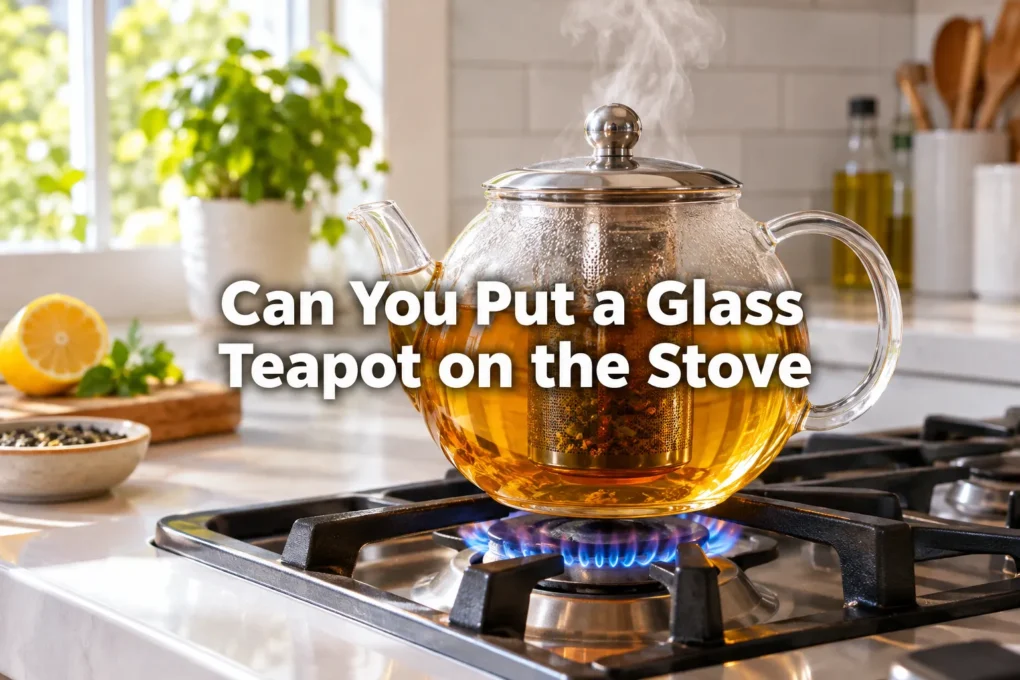
Can You Put a Glass Teapot on the Stove
Last updated: October 24, 2026
Quick Answer
Can You Put a Glass Teapot on the Stove… Yes, but only if the glass teapot is labeled stovetop safe by the manufacturer and made from borosilicate glass. A standard decorative glass teapot will likely crack from thermal shock if placed directly on a stove burner, so always check the product instructions before heating.
Key Takeaways
- Only borosilicate glass teapots rated stovetop safe should touch direct heat, according to glass teaware specialists.
- Most glass teapots sold today are designed for steeping only, not for boiling water in the pot itself, per expert teapot reviews.
- Gas stoves need explicit manufacturer approval; electric and induction stoves raise separate compatibility questions.
- Thermal shock, not heat intensity alone, is the main cause of cracked glass teapots.
- A 1000ml borosilicate teapot with a removable infuser is rated for microwave, gas, and electric stovetops on medium heat, per a recent product listing.
- Keep the infuser basket out of the teapot while heating water directly.
- Medium heat, not high heat, is recommended even for stovetop safe models.
- Never heat an empty glass pot or vessel on any stove.
- You can also microwave some glass teapots, but the microwave is a different heat source and should be confirmed separately on the label.
Can a Glass Teapot With Infuser Go on the Stovetop?
A glass teapot with an infuser can go on the stovetop only when the manufacturer explicitly states stovetop safe on the product label or instructions.
The infuser basket itself, usually stainless steel or plastic, should typically be removed before heating water directly in the glass vessel.
Many buyers assume that because a teapot looks like thick, sturdy glass, it must be fine on a burner. That assumption causes most cracked pots.
The Spruce Eats’ best teapot picks note that the bulk of glass teapots on the market are steeping vessels only, meant to hold water that’s already boiled in a kettle, not to sit on a flame.
Why this matters: A glass teapot is a decorative brewing item first and a heating vessel second, if at all.
Treating every glass pot as stovetop safe is the single biggest mistake buyers make, and it’s the reason so many reviews mention cracked pots after one or two uses.
What Type of Glass Teapots Are Safe for the Stove?
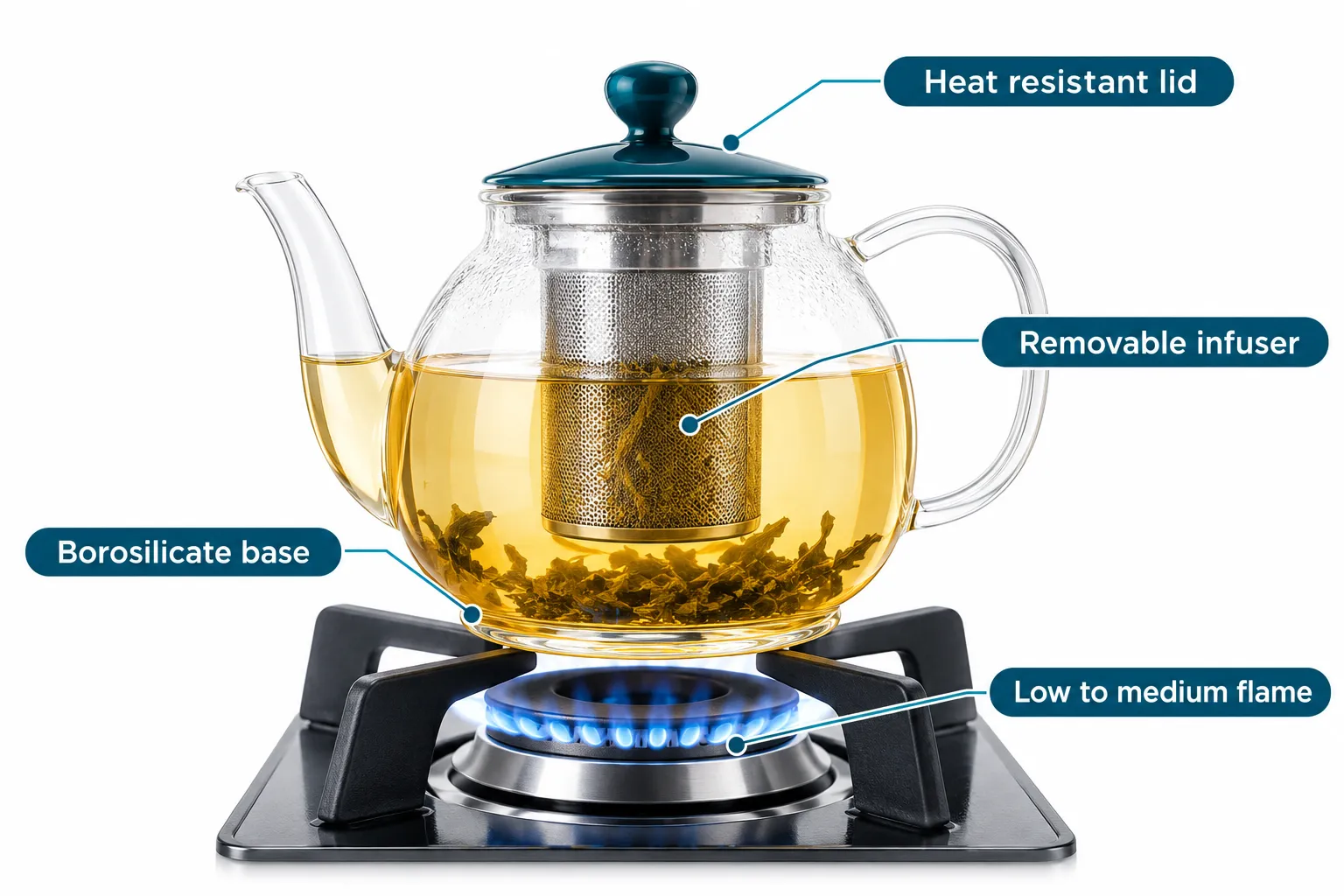
Only borosilicate glass teapots with manufacturer instructions confirming stovetop use are safe for direct heat. Soda lime glass, the material used in most decorative teapots, is not engineered for rapid temperature swings and will often crack.
Borosilicate glass is made with boron trioxide added to the silica mix, which lowers its thermal expansion rate dramatically compared to regular glass.
That’s why borosilicate glass teapot stovetop safe guides consistently point buyers toward this specific material. Look for:
- “Borosilicate glass” printed on the box or listing
- An explicit “stovetop safe” or “flame safe” claim from the manufacturer
- A flat, thick base built to sit on gas, electric, or ceramic burners
- Lids and handles made of heat tolerant materials, not plastic clips
A 1.8 liter borosilicate teapot advertised as safe on open flame is one current example of a product that passes all four checks, according to a UK retail listing.
Is It Actually Safe to Put a Glass Teapot Directly on Heat?
It’s safe only when the glass teapot is rated for direct heat and you follow basic precautions like starting on low to medium heat and never heating an empty pot.
Skipping these steps is where most cracks and breakages happen, even with borosilicate glass.
Safety guidance updated through 2026 from glass teaware product pages and Alibaba’s borosilicate glass stove insights repeats the same core rules:
- Never place an empty glass pot on a lit burner.
- Start on low to medium heat and increase gradually.
- Avoid drastic temperature differences, such as cold water into a hot pot.
- Inspect the glass for chips or hairline cracks before every use.
- Keep the burner clean and flat under the pot’s base.
Common mistake: Pulling a glass teapot straight from the fridge and setting it on a hot stove.
That jump in temperature is a textbook thermal shock scenario and will often crack even borosilicate glass.
Why Do Glass Teapots Crack on the Stove?
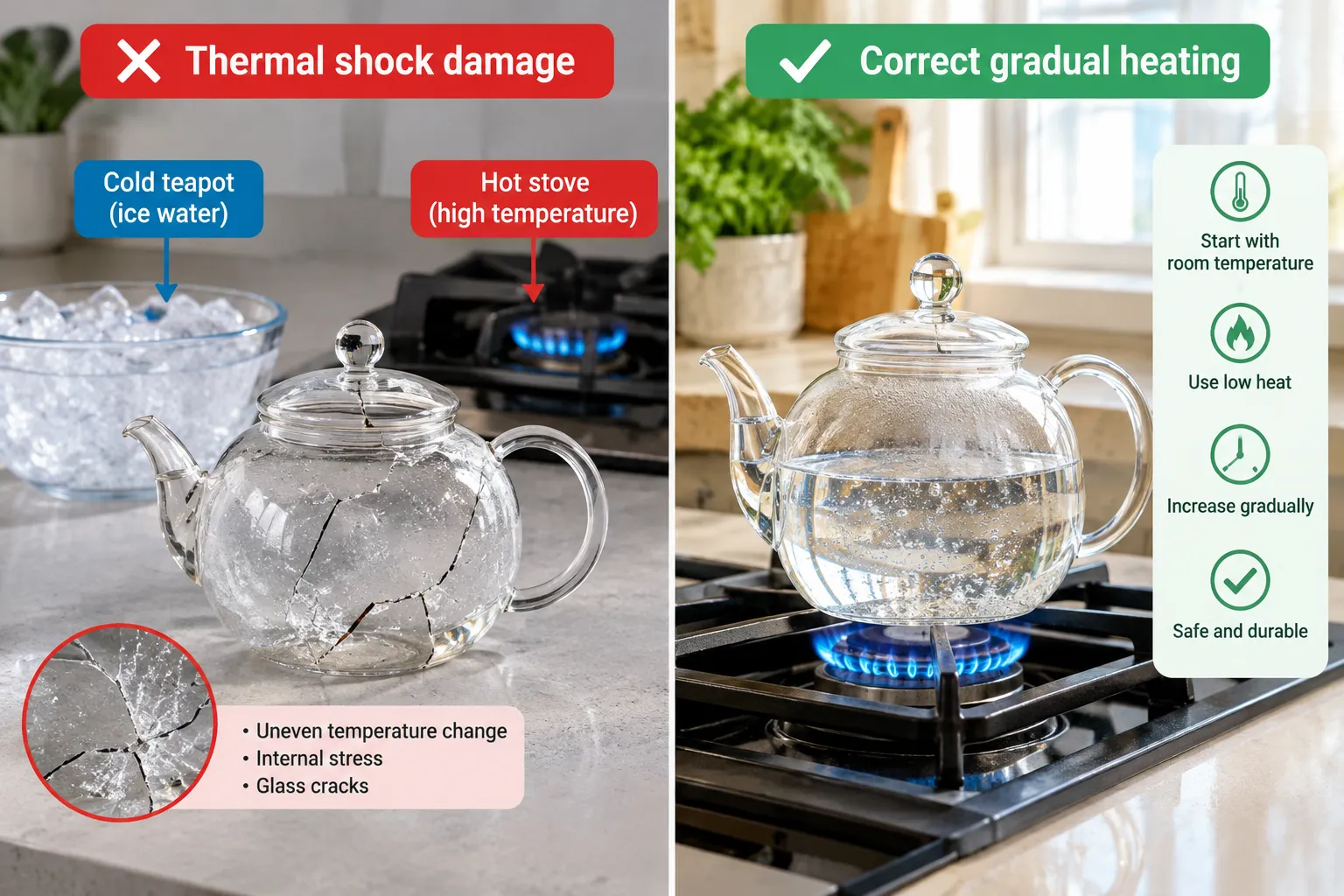
Glass teapots crack on the stove mainly because of thermal shock, which happens when one part of the glass heats or cools faster than another part.
Uneven expansion creates stress inside the material, and that stress eventually splits the glass.
This is why a cold glass teapot on a hot stove is risky, and why manufacturers recommend gradual heating.
Borosilicate glass resists this better than ordinary glass because its expansion rate is roughly three times lower, but it isn’t immune.
According to cookware testing notes, even rated stovetop safe borosilicate teapots should go from a cool burner to medium heat, not straight to high heat.
Other crack triggers include:
- Uneven burner flames licking up the sides instead of just the base
- A chipped rim or base that was already weakened before heating
- Setting a hot glass pot on a cold, wet countertop right after use
Can You Use a Glass Teapot on an Electric Stove?
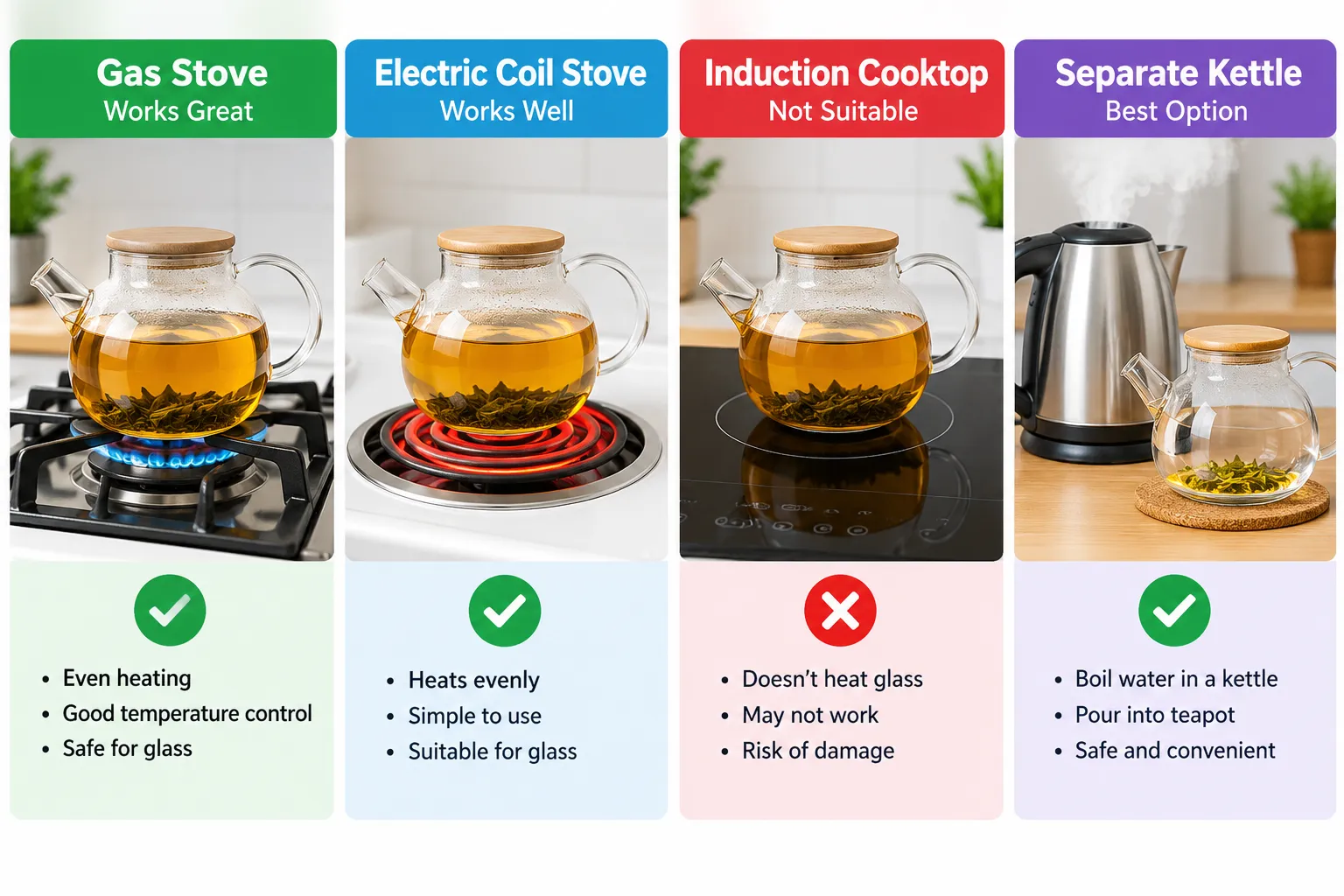
Yes, some borosilicate glass teapots are rated for electric stovetops, but burner compatibility still needs individual confirmation from the manufacturer.
Electric coil burners heat unevenly compared to gas flames, which can stress glass differently.
A 550 ml borosilicate teapot rated for both gas and electric stovetops from minus 20 degrees Celsius to 150 degrees Celsius is one current example of a product built for this flexibility, per a 2026 retail listing.
Still, electric stoves vary. Flat coil burners distribute heat more evenly than older spiral coils, so a teapot that works fine on one electric stove may perform differently on another.
If you’re shopping specifically for electric stove use, our glass stove top kettle guide covers related compatibility questions for glass vessels on different heat sources.
Do Glass Teapots Work on Induction Cooktops?
Plain glass, including borosilicate glass, is not enough for induction cooktops. Induction stoves heat through magnetic induction, which requires a magnetic metal base, something glass simply doesn’t have.
A few hybrid teapots include a metal plate or disc built into the base specifically to work on induction, but a standard all-glass teapot, even one labeled stovetop safe for gas and electric, will not heat on an induction burner at all.
If induction is your main cooktop, you’ll want a stainless steel kettle instead, and our stainless steel kettle stove top guide walks through better options for that heat source.
Can Glass Teapots Go on Gas Stoves?
Glass teapots can go on gas stoves only with explicit manufacturer approval for gas use specifically, not just a general stovetop safe label.
Gas flames can wrap around the sides of a pot, unlike flat electric burners, which changes how heat distributes across the glass.
Gas stove approval is essential because an unevenly licking flame against the sides of a teapot creates more localized hot spots than a flat electric burner does.
A 1000 ml borosilicate teapot with a removable infuser rated safe for gas, electric, and microwave use on medium heat is a good example of a product that spells this out clearly, according to its Kohl’s listing.
For readers specifically comparing kettles for open flame, our best tea kettle for gas stove roundup and glass tea kettle for gas stove top resources dig deeper.
What’s the Difference Between Glass and Ceramic Teapots?
Glass teapots let you watch the tea leaf unfurl and steep, while ceramic teapots retain heat longer and hide the brewing process.
Heat tolerance also differs: most ceramic pots are not stovetop safe either, unless specifically glazed and reinforced for direct heat.
Can I heat a ceramic teapot on the stove? Generally no, unless the manufacturer states it’s flame safe.
Most ceramic teapots, like most glass ones, are built for steeping water that’s already hot, not for direct burner contact.
Cast iron teapots, by comparison, handle heat retention differently and some models, like those covered in our cast iron teapot guide, are built with thicker walls designed for warmth retention rather than active boiling.
How Do You Brew Loose Leaf Tea Without Heating the Teapot?
You brew loose leaf tea without heating the teapot by boiling water separately in a kettle, then pouring it over the leaves inside the glass pot’s infuser basket. This is the standard method for teapots that aren’t stovetop safe.
Steps for this approach:
- Boil water in a stovetop or electric kettle to your target temperature.
- Place loose leaf tea into the teapot’s infuser basket.
- Pour the hot water over the leaf inside the glass teapot.
- Let the tea steep for the recommended time, then remove the infuser.
Our how to use a teapot with infuser guide covers this process step by step, including steeping times for different tea types.
What Should You Do With the Infuser While Heating?
Remove the infuser basket from the glass teapot before placing the pot directly on the stove to heat water.
Leaving loose leaf tea or the infuser basket in during direct heating can lead to over-extraction and uneven heat distribution around the basket’s metal parts.
If you’re heating water directly in a stovetop safe borosilicate teapot, add the leaf only after the water reaches temperature and you’ve removed the pot from heat.
This keeps the brewing process consistent and prevents metal infuser parts from overheating against the hot glass.
Does Borosilicate Glass Mean a Teapot Is Stovetop Safe?
No, borosilicate glass alone does not guarantee stovetop safety.
The material is necessary for heat resistance, but the manufacturer still has to test the full teapot design, including the base thickness and construction, before labeling it stovetop safe.
This distinction trips up a lot of shoppers on Amazon.
A product listing might mention borosilicate glass in the description while the actual instructions say “not for stovetop use” or only mention microwave and dishwasher safety.
Always read the actual usage instructions, not just the material name, per guidance from heat resistant glass teaware retailers.
Our borosilicate glass teapot stovetop safe resource breaks this distinction down in more detail.
Can You Pour Boiling Water Into Any Glass Teapot?
Yes, most glass teapots, including those not rated for stovetop use, can safely receive boiling water poured in from a kettle.
The risk with glass teapots comes from direct flame contact, not from holding hot liquid that’s already boiled elsewhere.
Can you pour boiling water into a teapot? In general, yes, pouring hot water into a room temperature glass or ceramic teapot is standard practice and is how most people actually use these products day to day.
The bigger risk is pouring boiling water into a teapot that was just taken from the fridge, since that sudden swing can still cause thermal stress even without a stove involved.
Can You Put a Cold Glass Teapot on a Hot Stove?
No, placing a cold glass teapot straight onto a hot stove is one of the fastest ways to crack it, even if the pot is borosilicate and rated stovetop safe.
The sudden jump in temperature causes uneven expansion across the glass.
Instead, place the teapot on a cool or barely warm burner first, then increase heat gradually.
This single habit prevents most thermal shock cracks reported in product reviews and comment sections.
How Do You Prevent a Glass Teapot From Breaking?
You prevent a glass teapot from breaking by avoiding sudden temperature changes, never heating it empty, and checking the glass for cracks or chips before each use.
These three habits address the majority of breakage complaints found in buyer reviews.
Additional prevention tips:
- Use a flat, clean burner surface instead of an uneven one.
- Avoid setting a hot pot on a cold or wet countertop.
- Store the teapot where it won’t bump against other kitchenware.
- Follow the manufacturer’s temperature range, such as minus 20 to 150 degrees Celsius noted on some models.
Are Glass Teapots Better Than Metal Kettles?
Glass teapots and metal kettles serve different purposes, so neither is universally better.
Glass teapots let you see the leaf steep and often look better on a table, while metal kettles, especially stainless steel, handle direct high heat boiling more reliably over time.
If your main goal is fast boiling on a gas or electric stove every day, a stainless steel kettle is usually the sturdier choice, and our stainless steel tea kettles for the stovetop guide and stove top kettle vs electric comparison can help with that decision.
If you want visual brewing and don’t mind boiling water separately, a glass teapot with infuser is the better fit.
How Long Can You Leave a Glass Teapot on the Stove?
You should only leave a stovetop safe glass teapot on the stove long enough to reach your target temperature, typically a few minutes on medium heat, not a prolonged boil.
Extended direct boiling increases wear on the glass and can affect brewing quality once tea leaf is added.
Tea specialists note that even rated stovetop safe teapots are better suited to short heating sessions rather than acting as a full boiling kettle replacement, since teapots are fundamentally designed for steeping, according to best teapot reviews.
Can You Put a Glass Teapot Directly on the Flame?
Only if the manufacturer specifically states the teapot is safe for gas flame use.
Many stovetop safe glass teapots are rated for medium heat on a burner but not for direct, high intensity flame contact that wraps up the sides of the vessel.
A 1.8 liter borosilicate teapot marketed as safe for open flame use is one example that passes this specific bar, as noted in a UK retail product page.
Without that explicit claim, assume the pot is for steeping only.
What Should You Look for in a Heat Safe Glass Teapot?
Look for an explicit stovetop safe or flame safe label, borosilicate glass construction, a flat and thick base, and heat tolerant handles and lids free of plastic clips.
These four factors together determine whether a glass teapot can handle real stove heat.
Also check the listed temperature range, such as minus 20 to 150 degrees Celsius mentioned on some current models, and confirm whether the rating covers gas, electric, both, or neither.
Reading the full product description rather than skimming the title prevents most buying mistakes, based on patterns found across glass teapot buyer guides and glass teaware comparisons.
Best Stovetop Safe Glass Teapots to Buy
A handful of borosilicate glass teapots on the market today are explicitly built and labeled for stovetop use, which makes them the safer pick if you want to heat water directly in the pot.
Options worth comparing include models rated for gas, electric, or both.
| Feature | What to Check |
|---|---|
| Material | Borosilicate glass, not soda lime |
| Heat source rating | Gas, electric, or both, confirmed explicitly |
| Infuser basket | Removable, usually stainless steel |
| Lid and handle | Heat tolerant, free of loose plastic parts |
A borosilicate teapot rated for both gas and electric stoves from minus 20 to 150 degrees Celsius is a solid benchmark model, per current retail listings, and a 1000 ml version with a removable infuser basket rated for microwave, gas, and electric use on medium heat is another option worth comparing, according to this product page.
You can view current pricing and availability for a compatible option in the US here or in the UK here.
If you’re also wondering can you put a teapot in the microwave, the answer follows the same logic: check the label for microwave safe before assuming, since some borosilicate teapots carry both microwave and stovetop ratings while others carry neither.
Should You Leave the Tea Leaves In While Keeping Tea Warm?
No, leaving tea leaves in the infuser basket while keeping tea warm on a low burner setting usually leads to over extraction and a bitter cup.
It’s better to remove the leaf once steeping time is complete, even if you plan to keep the glass pot warm afterward.
If you want to keep brewed tea warm without continuing to steep, remove the infuser basket, set the stove to its lowest setting or turn it off entirely, and let residual heat from the glass vessel do the work instead of active flame.
FAQ
Can I heat a ceramic teapot on the stove?
Generally no, unless the manufacturer specifically states the ceramic teapot is flame safe. Most ceramic teapots are designed for steeping water that’s already hot, not for direct stovetop heating, and attempting it can crack the glaze or the body itself.
What kind of pots should you use on a glass top stove?
Use flat bottomed pots made of materials like stainless steel, cast iron, or stovetop rated borosilicate glass. Avoid pots with warped or uneven bases, since glass top stoves need full, even contact with the burner surface to heat properly and avoid scratching.
What is the best tea kettle for a glass top stove?
A stainless steel kettle with a flat, smooth base is typically the safest choice for a glass top stove, since it distributes heat evenly and won’t scratch the cooktop surface. Our stainless steel kettle stove top guide covers specific models suited to this setup.
Can you pour boiling water into a teapot?
Yes, pouring boiling water into a room temperature glass or ceramic teapot is standard and generally safe practice. The real risk comes from pouring hot water into a pot that was just taken from the fridge, since that sudden temperature jump can cause cracking even in quality glass.
One Last Thing
Checking the label before heating any glass teapot on a stove saves more pots than any other single habit. If the box or listing doesn’t say stovetop safe, treat the teapot as a steeping vessel only, boil your water in a separate kettle, and pour it over the leaf instead.
Related Guides
- Borosilicate Glass Teapot Stovetop Safe
- Glass Teapot With Infuser
- How to Use Teapot With Infuser
- Best Tea Kettle for Gas Stove
- Stove Top Kettle vs Electric
Conclusion
The honest answer to Can You Put a Glass Teapot on the Stove is: it depends entirely on what the manufacturer says, not on how thick or sturdy the glass looks.
Borosilicate glass teapots explicitly labeled stovetop safe can handle gas or electric burners on low to medium heat, while ordinary glass teapots are built for steeping only and should never touch a flame.
Check your product’s instructions, keep the infuser basket out during direct heating, avoid sudden temperature swings, and you’ll get years of use out of your teapot instead of a cracked one after a single try.
If you’re shopping for a new option, compare current stovetop safe borosilicate models in the US orUK before your next brew.





Pingback: Electric or Stovetop Tea Kettle: Which Is Best for Your Routine? - Stainless Steel Tea Kettles